Abkhazia

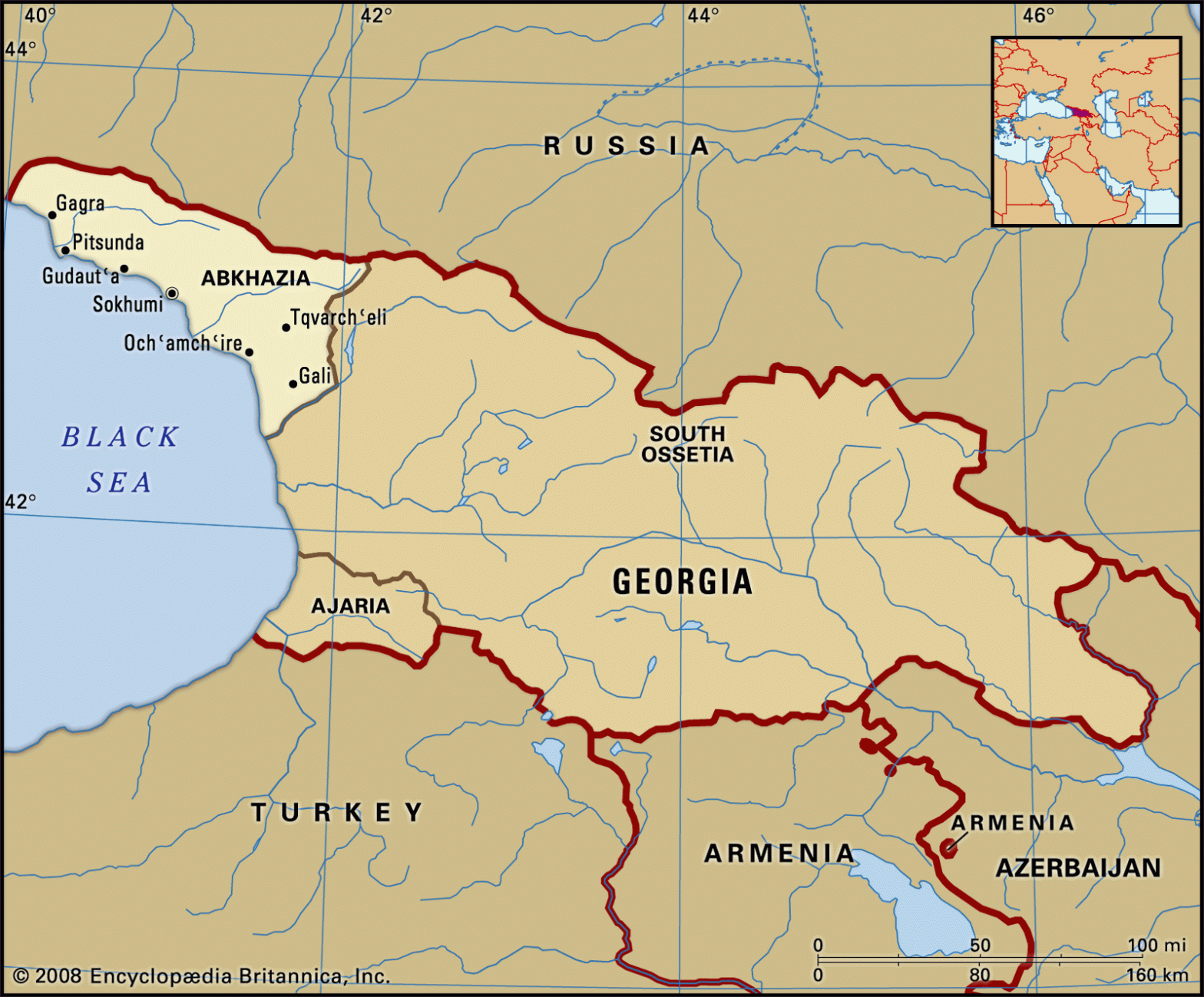
Located in the southern Caucasus, it came under Russian rule at the start of the 19th century. Following the Russian Revolution, it became a Soviet Socialist Republic, before being incorporated into the Georgian Soviet Socialist Republic, as an autonomous republic, in 1931.

On 23 July 1992, following the collapse of the Soviet Union, Abkhazia unilaterally declared independence. Although Georgia tried to reassert its authority, Abkhaz forces aided by Russia were able to hold on to most of the territory until, in May 1994, an UN-monitored ceasefire was reached.

Although peace talks were held in the years that followed, in August 2008 Russia and Abkhazia launched an operation to take back the remaining territory held by Georgia.

Moscow then announced that it had recognized Abkhazia as an independent state; as did five other countries: Venezuela, Nicaragua, and the Pacific island states of Nauru, Vanuatu, and Tuvalu.

Overall, it’s hard to see where things go from here. There’s little immediate prospect of reunification. Meanwhile, wider international recognition seems highly unlikely.

This is one of the most clearly frozen of all the independence conflicts. South Ossetia is different. Despite the international recognition it has received alongside Abkhazia, I’m not entirely convinced it is truly a de facto state.

Nor do I think it truly aspires to independence. Instead, many believe the aim is to unite with Russia.

What do you do? It’s 1934, and you are a German Jew

Talking to Anonimo about the situation in Argentina got me thinking. What if I were in his shoes? What if I were afraid I would be shot on November 8th? I would sure try to disappear.

Get to another country or in the woods or something. When I moved from California to Texas everything I owned fit in my van and I was able to live in it while I looked for an apartment.

Now I have been here for almost two years and I would have to get rid of a lot of crap to be mobile again.  But if I could get down to a van’s worth of crap, That would give me the US, Canada, Mexico, and Central America, if I could get across the border.

Anarchists have a history with the mountains.  Bert and Holly Davis camped on the Oregon Coast for over 30 years.  There are anarchist communities where you can disappear. 

I would try Catholic Worker communities because I have had some experience with them. If I could get down to a small yacht’s worth. I could travel the world.

Think of the life you want to live and get rid of everything that isn’t in that life. If your fantasy is to travel the world on a yacht, sell everything that isn’t part of that life. 

If you want to be a van dweller, sell everything that won’t fit into your van. If you want to be a digital nomad, get it down to 2 suitcases, or even one carry on.

How do you get rid of all the stuff? I fell in love in 2012, moved to the Philippines, and actually got a lot of money selling stuff.  I looked up items online, that gave me a picture I could use for ads.

Ebay and Amazon gave me an idea for a beginning price. I also took items to pawn shops to see what they would offer for them. I posted things on Craig’s list, but there are many other places to post items.

You can have yard sells, or take your crap to a flea market. I started with a high price then lowered the price every week (or month) by 5%. If it got down to less than $5. I posted it on freecycle.

It was easy, people came to my house to pick up the item.  I was surprised both by how much I got for some items and how little I got for others. Other ideas; Turn all the hangers around in the closet, and if you don’t wear it get rid of it. 

Set aside an area, a drawer, a closet, or a room. If you don’t use it in a specific amount of time sell it, or get rid of it.

002. Letters of Opposition or support – Campaign against Sweatshops

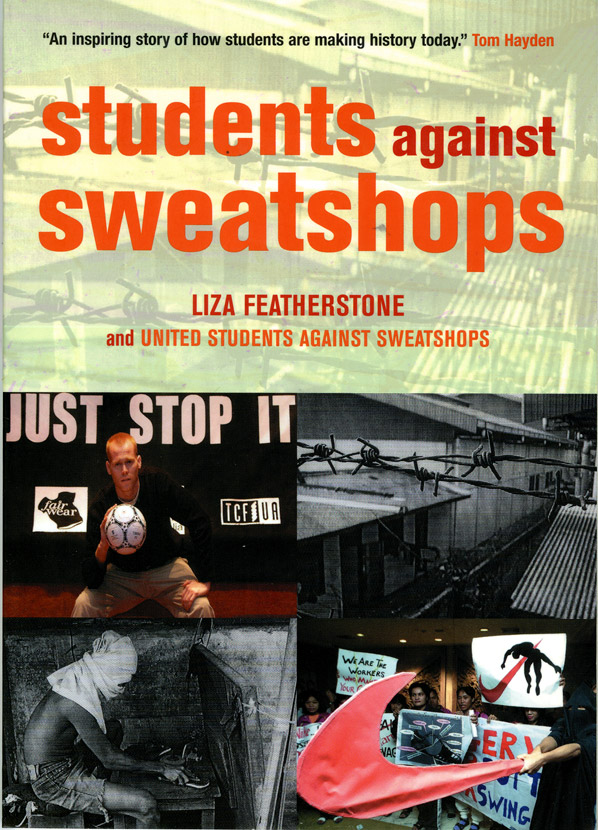
In the fall of 1997, students at Duke University formed the group Students Against Sweatshops (SAS) to push the Duke administration to create and adopt a code of conduct policy that would require the companies that manufactured Duke apparel and merchandise to uphold workers’ rights and eliminate the use of sweatshops.

In September of 1997, members of SAS sent a letter to Duke president Nan Keohane informing him of their intentions. When he did not respond by the end of October, SAS members sent hundreds of emails to the administration demanding that they begin a dialogue.

Within a week, President Keohane set up a meeting between administrators and SAS members to discuss the possibility of creating a code of conduct policy.

SAS members helped push the administration to create tough standards by threatening to embarrass the university with public protests regarding the unethical business practices of the companies in which Duke invested.

After this campaign, the SAS group turned its attention to other labor issues and grew into a national organization, but its presence on Duke’s campus helps to ensure that the university upholds the original code of conduct policy.

Palestine

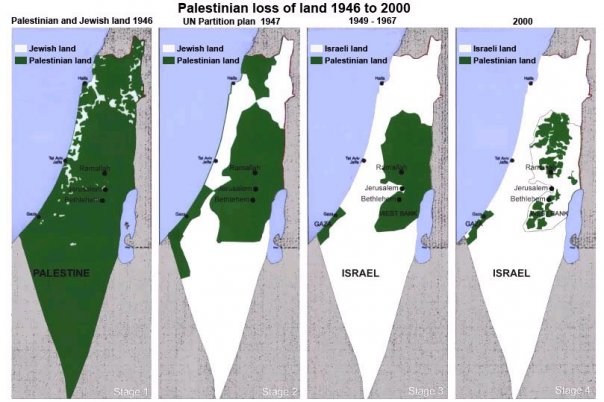
In 1947, the United Nations proposed that the British held territory of Palestine be partitioned to create an independent Jewish and an independent Arab state.

This was rejected by the Palestinians, and when Israel was created, in May 1948, it was immediately attacked by its Arab neighbors. In the ensuing conflict, Israel captured three-quarters of the territory originally set aside for a Palestinian state.

Just under 20 years later, Israel was attacked again. This time it took control of the remaining Palestinian territories: the West Bank and Gaza. This led to UN Security Council Resolution 242, which called for Israel to withdraw from the territories it had captured in 1967, and for all parties to accept the sovereignty and territorial integrity of every state in the region.

Then, in 1974, the UN General Assembly confirmed the inalienable rights of the Palestinians to self-determination and national independence. On 15 November 1988, the Palestinian Liberation Organization, the PLO, formally proclaimed the State of Palestine.

While Israeli and Palestinian leaders subsequently agreed to a two-state solution, which would see a fully independent Palestine coexist alongside Israel, progress has stalled.

As a result, Palestine has pressed ahead with its diplomatic campaign for recognition. Today, its statehood has been accepted by almost 140 countries around the world, and in 2011 it applied to join the UN.

Although this was blocked by the United States, on 29 November 2012 Palestine was admitted as a non-member observing state at the UN. However, as things stand, there’s little sign a fully independent Palestinian state will exist anytime soon.

Meanwhile, Israel’s threats to formally annex the occupied territories risk making the actual realization of a Palestinian state all but impossible.

Srpska

In 1991, the Socialist Federal Republic of Yugoslavia broke apart, sparking a series of conflicts. In Bosnia-Herzegovina, Bosnian Serbs and Bosnian Croats fought to break away and unite with Serbia and Croatia respectively.

In 1995, a peace agreement was negotiated that saw the Bosnian Serbs reintegrate their self-proclaimed entity, Republika Srpska, into the Bosnian state – albeit with a high degree of autonomy.

At first, this reintegration appeared to be making progress. However, over the past decade this has been reversed. Much needed constitutional reforms have failed and political relations have broken down between the communities.

Meanwhile, senior members of the Bosnian Serb leadership have repeatedly and increasingly suggested that Republika Srpska might try to break away and either form an independent state or unite with neighboring Serbia.

In reality, it seems hard to see how either could happen. Secession is explicitly ruled out under the terms of the 1995 peace agreement and Bosnia’s territorial integrity has been repeatedly reaffirmed by the UN Security Council.

Nevertheless, threats of secession remain a source of genuine concern. Many feel that there’s a real possibility of a return to conflict if the situation is not managed carefully.

Non-Violent method #1 Speeches

Shoreham Nuclear Power Plant, 1976-1989

In 1965 Long Island Lighting Company (LILCO) president John J. Tuomy announced the intent to open a nuclear power plant in East Shoreham on Long Island New York at LILCO’s annual shareholders’ meeting. 

In June of that year, SHAD (Sound-Hudson Against Atomic Development) hosted a rally and march at the construction site of the Shoreham Plant. In June of that year, SHAD hosted a rally and march at the construction site of the Shoreham Plant. 

Members of SHAD and dozens of local groups attended. After speeches and music by folk singer and activist Pete Seeger on a nearby beach, activists marched to the construction site.

SHAD dismantled in the early 1980s, but the local protest of the Shoreham Plant continued. In 1981, 43 percent of Long Island residents opposed the Shoreham Nuclear Power Plant.

By 1986 74 percent of Long Island residents opposed the plant. Local residents continued to attend meetings and distribute fliers against the Shoreham Plant.

On February 28, 1989, New York Governor Mario M. Cuomo announced that the Shoreham Nuclear Plant must close. The governor and LILCO signed an agreement to shutter the plant, increasing taxes on Long Island residents to cover the $6 billion dollar costs of construction.

In 1992, Shoreham was fully dismantled without generating any commercial electricity.

Ambazonia

Along with West Papua, this is perhaps one the lesser-known of the current disputes. However, it’s also one that should be watched very closely. The dispute is centered on the central African country of Cameroon.

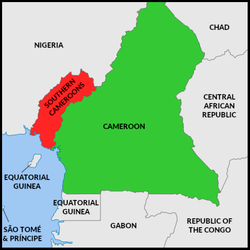
In 1884, Germany established a colony in the region that was then captured and divided between Britain and France during the First World War. The British held part was further divided into two administrative districts: the Northern and Southern Cameroons.

When the French-held territory became independent as the Republic of Cameroon, in 1960, the area under British rule held a referendum to decide its future.

While the northern part decided to unite with neighboring Nigeria, the Southern Cameroons opted to merge with Cameroon. This occurred on 1 October 1961 to form the Federal Republic of Cameroon.

As is so often the case in these situations, the union proved to be unhappy and in 1972 the federation was abandoned in favor of a unitary state. In the decades that followed, resentment grew in the Anglophone region.

And in late 2016 protests broke out that led to a harsh crackdown by the central government. On 1 October 2017, political forces in the region declared independence as the Republic of Ambazonia.

In response, the government launched a military campaign to reassert control. Since then, it’s estimated that the ensuing conflict has cost over 3,000 lives and displaced up to a million people.

While there have been efforts to broker talks between the sides, these have failed to produce any sign of a peace deal. In the meantime, this conflict, one of the most serious active armed disputes in Africa, if not the world, receives remarkably little international attention.

Catalonia

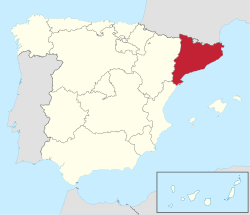
At one time, most of the attention on Spain was focused on the Basque Region. However, for the past decade, it’s Catalonia that’s taken the limelight.

The problem really came to the fore in June 2010, when the Spanish Supreme Court ruled that elements of a 2006 Spanish law granting greater autonomy to Catalonia, the country’s second-largest province, were unconstitutional.

This then prompted mass demonstrations. In the years that followed, support for a vote on independence grew. Following an election in 2015, the Catalan leadership organized a referendum on independence on 1 October 2017.

Despite strong opposition from the Spanish government, 43% of the electorate turned out to vote. Of this, 93% supported independence. 10 days later, on 10 October, the President of Catalonia declared that Catalonia was independent – but immediately put the declaration on hold pending talks with Spain.

After Madrid refused discussions, the Catalan parliament unilaterally declared independence on 27 October 2017. In response, the Spanish Government immediately suspended Catalonia’s autonomy and imposed direct rule.

Within days, the effort to secede collapsed, and, in October 2019, nine leaders of the attempted secession were jailed for 9-13 years for their role in the attempt to break away.

While a strong strand of pro-independent sentiment remains in Catalonia, it’s hard to see how Spain will permit a formal referendum on the issue any time soon.

Free Travel

You have to free yourself, so anything you can’t fit into a rucksack you don’t need. Sell the things that are holding you back. Save enough money for a one-way flight and three weeks’ worth of food.

For food, ask local restaurants for leftovers. In rich cities and rich countries buy food in supermarkets, which is the cheapest way and just eat on the streets. 

You can also cook with your host, which can be a pretty unique experience. Another thing is dumpster diving; maybe over 40-50% of the food that is being produced is being thrown away, and a lot of people have a problem with that, so they go to supermarket bins after the closing hours, and just take all the food that was not sold that day.

For accommodation, try Couchsurfing. Or just ask random people in the streets, “Hey can I sleep at your place tonight.” But there are other alternatives; one of them is camping, you have your tarp or tent, you can sleep almost anywhere you want.

In big cities sleep in parks with a sleeping bag and mattress. The last one when it comes to accommodation is volunteering. There are a lot of opportunities all around the world that offer you to work in exchange for accommodation, sometimes even food. 

Hitchhike in cars, trucks, horses, motorcycles, boats, even airplanes. There are other alternatives to transportation. One of them is walking, So, you just take your backpack and hit the road.

Another way is cycling; it’s not maybe completely free, because you have to buy the bicycle, and eventually fix it, but it’s much cheaper than the conventional methods of transportation. 

And the last one is actually working in exchange for transportation. Working on yachts you don’t have to pay for the ride, just do some work on the boat, like some night watches, cooking, and stuff like that.

You can earn money while traveling. One way is busking, playing the guitar on the streets. You don’t need to be a musician.  Learn three chords, (or learn slack key) and four songs, Then just repeat those four songs.

The most important thing is to have a story. Always have a small cardboard sign. Have somebody write in the local language, where you’re from, what you’re doing there, your story.

People will donate a little bit of money, some sandwiches, sodas, and so on. One other way is to write; you can write a blog, open up a Facebook page. 

After a while, you can maybe write a book, and so on. As a tourist try to get some work that allows you a place to sleep as well. In some cases, if you’re willing to teach English in non-English speaking countries then sometimes the school will fly you out there so your travel is already paid for as well.

Contracts like that last six to twelve months. Farm work is out in nature and they give you accommodation, food, and you work like 20 hours a week which is not bad. 

If you are a cook or waitstaff you might be able to find something in beach areas during the summer and skiing areas during the winter (any tourist area). Try to get there early, before the season starts.

Quebec

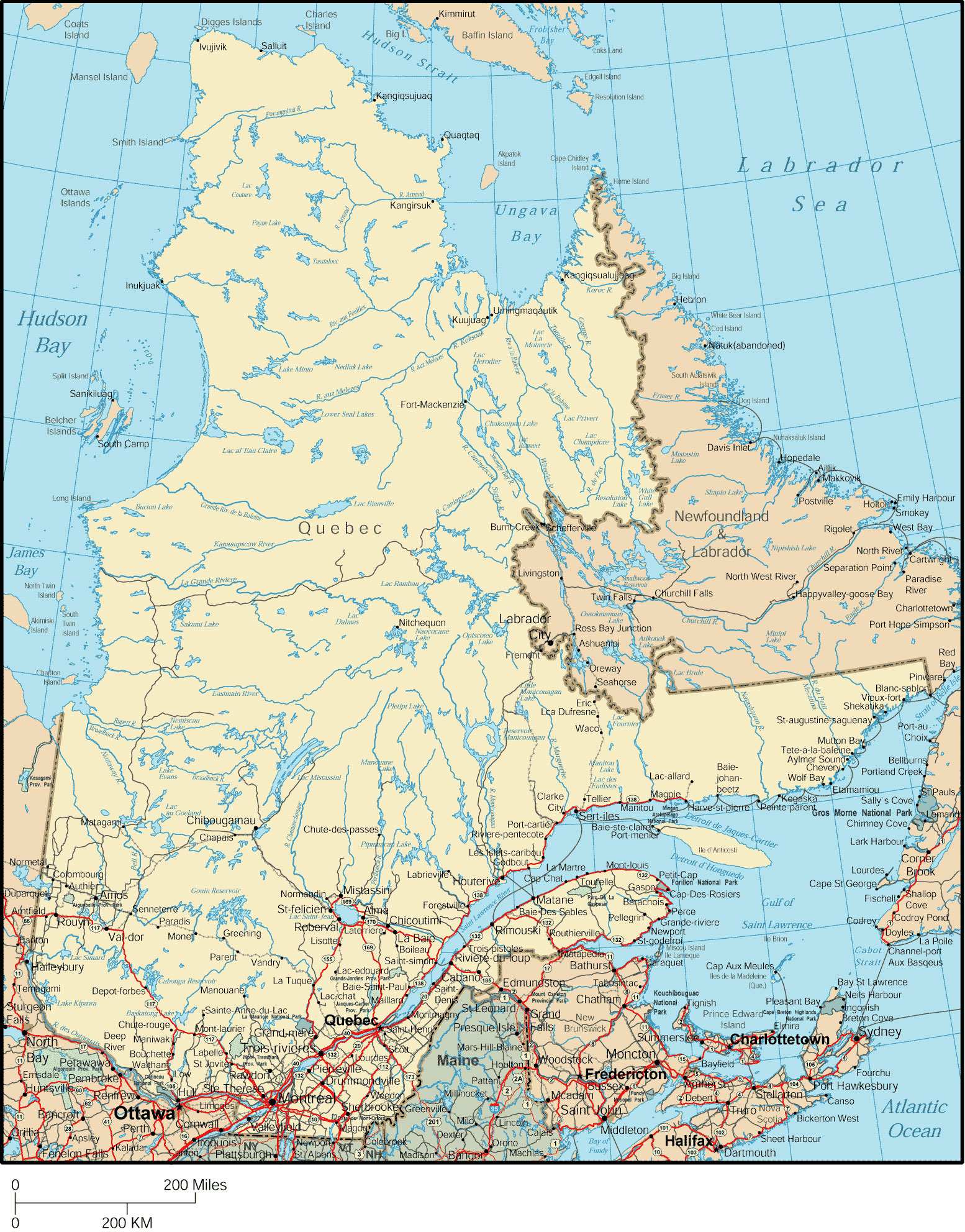
In 1763, France ceded Quebec to Britain. As a British territory, and then a province of Canada, Quebec nevertheless retained its French-language identity.

In May 1980, it held a referendum on the creation of a new, loose relationship with Canada that would essentially be based on independence – but with certain shared functions, such as a currency.

Although this plan was defeated by 59.6% to 40.4%, calls for change continued to grow. 15 years later, in 1995, another referendum was held. This time, the proposal was for full independence.

On this occasion, the proposal was defeated by the narrowest of margins: 50.6% to 49.4%. Since then, however, support for independence appears to have dropped.

Polls now show that around 30 percent of the roughly 8.5 million Quebecois are in favor of breaking away. Instead, priorities seem to be focused on retaining a French identity within Canada and pursuing greater cultural and economic autonomy – rather than outright independence.

Nevertheless, despite its apparently subdued state, there is undoubtedly the possibility that the pro-independence campaign may see a resurgence again in the future.

Meanwhile, it remains a very familiar independence campaign and without a doubt the most significant movement for sovereign statehood in the Americas.