John Nyangulu

Global Campaign Fellow-Free Market Revolution at Students For Liberty

National Coordinator at Students For Liberty

Executive Director at The Malawi Students For Liberty Organisation

National Coordinator at Liberty Sparks

I became a liberal after being introduced to the ideas by Evans Exhaud, CEO of Liberty Sparks, a think tank based in Tanzania. Exhaud selected me as his IDEA’s Emerging Leaders Ambassador.

Through IDEA’s, I was introduced to Students for Liberty, Africa. What I want to see is a freer future for all. My own personal vision is to open a policy think tank that will aim at youth empowerment through leadership and policy formulation training; to create intellectual and human resources for the movement.

Self Determination Advocates can help by making me one of the members of the team, I can volunteer so I can grow my knowledge of classical liberalism. Currently, I am the national coordinator for Students for liberty. 

I want to learn more about the philosophies of liberty. As a Bachelor of Arts Humanities (philosophy) graduate, I am free to explore the world of ideas with you and I can dedicate my time.

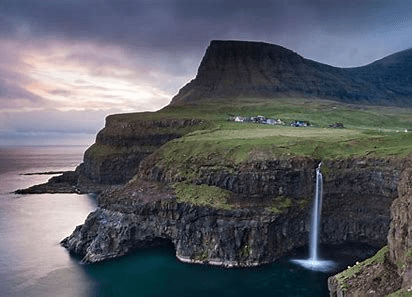
Faroe Islands

In Tórshavn, the picturesque Faroese capital is the Speaker’s chair in the Løgting, the Faroese ancient parliament, the origins of which can be traced back more than 1,000 years, when a shipload of Vikings stumbled upon the umbrella-shaped Faroese archipelago on their way to Iceland. 

According to some sources, they were simply too seasick to continue their journey and chose to settle on the islands, driving out the wandering Irish monks who had lived there since the seventh century AD.

The Løgting, where, in line with the Home Rule Act of 1948, only Faroese internal matters are supposed to be debated by 32 local MPs (foreign policy and executive power are in the hands of the Danish crown), sits in a black log cabin with a turf roof in the center of Tórshavn. 

All procedures are conducted in the Faroese language – a derivative of Old Norse and West Norwegian, now recognized as the main language of the islands.

Until 1938, the Danes treated the Faroese language as a small regional dialect and it was forbidden to teach it in schools. For centuries, it remained a popularly spoken tongue only; there was no recognized Faroese literature until 1890.

This is no longer the case. One of the most amazing sides of modern Faroese culture is the number of books (about 150 titles a year) written and published in the native language. 

Shakespeare, Dostoevsky, and even Homer’s hexameters have been translated into Faroese by local enthusiasts. The mini-state also publishes several daily newspapers in Faroese.

The biggest problem the Faroese faced when trying to recreate their old tongue and turn it into a written language was the absence of words for such modern notions as ‘television’, ‘video’, ‘computer’, ‘compact disc’ and so on.

 Instead of using foreign borrowings, they decided to come up with some genuine Faroese neologisms. Thus a computer became telda – from tal (number); a computer screen became skiggi – the word for a sheep’s stomach stretched across the smoke-holes of houses in the time before glass windows; and a compact disc became flöga – from the round wooden blocks put under haystacks.

That passion for the preservation of local languages and culture is perhaps the most distinguishing trait of all existing SIMs. Unperturbed by the ‘global village’ and ‘unified Europe’ rhetoric, most of them stay clear of pacts, leagues, and alliances, simply because they are quite happy to be on their own in our conflict-ridden and chaotic world that strives for integration, and yet is increasingly divided.

Akrotiri and Dhekelia

The British Sovereign Base Areas of Akrotiri and Dhekelia (population 15,500) comprise those parts of Cyprus that stayed under British jurisdiction and remained British sovereign territory when the 1960 Treaty of Establishment created the independent Republic of Cyprus. 

They constitute a semi-independent British Overseas Territory, under the governance of an administrator, who at the same time is the commander of the British Forces Cyprus.

The bases remain formally a part of the UK, but can only be used for military and not commercial or any other purposes. It is the only part of the UK where the euro, and not the pound, is in circulation.

The bases have their own legal system, distinct from both the UK and Cyprus, but keep, as close as possible, to the laws of the latter. The Court of the Sovereign Base Area is concerned with non-military offenses committed by any person within Akrotiri and Dhekelia.

Law and order are maintained by the Sovereign Base Areas Police, while military law is upheld by the Cyprus Joint Police Unit. The Greek Cypriots living within either SBA actually have the right to both a Cypriot and a British Passport.

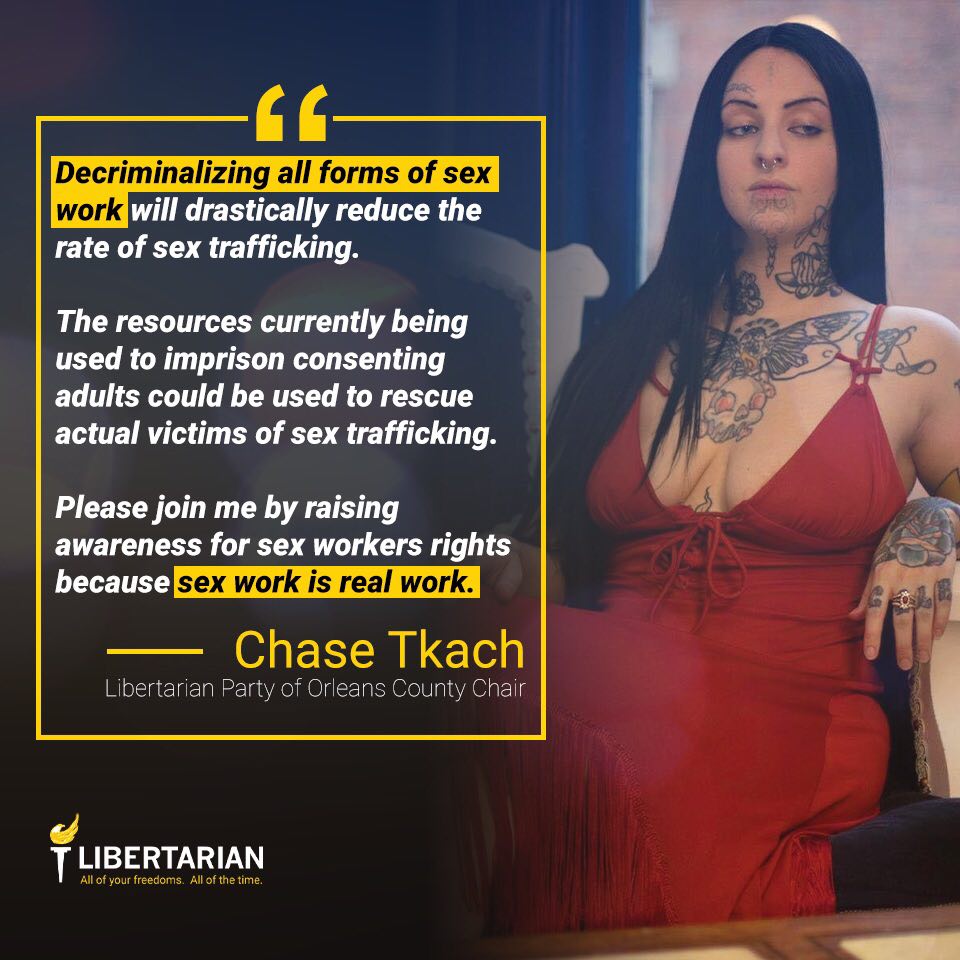
Chase Tkach

I’m not sure what kind of libertarian I am yet, but I’m definitely not an anarcho-capitalist and I’m definitely not a libertarian socialist. I just follow the basic libertarian platform.

I founded and I am currently the Chairperson of the Orleans county libertarian party in New York.

Previously a state committee member for the LANY. I am fighting for sex workers’ rights internationally, but I’m starting my advocacy here in America.

I do what I can for sex workers facing homelessness, domestic violence, legal issues, negative stigma, and family court discrimination. Self-determination Advocates should speak up for sex workers’ rights.

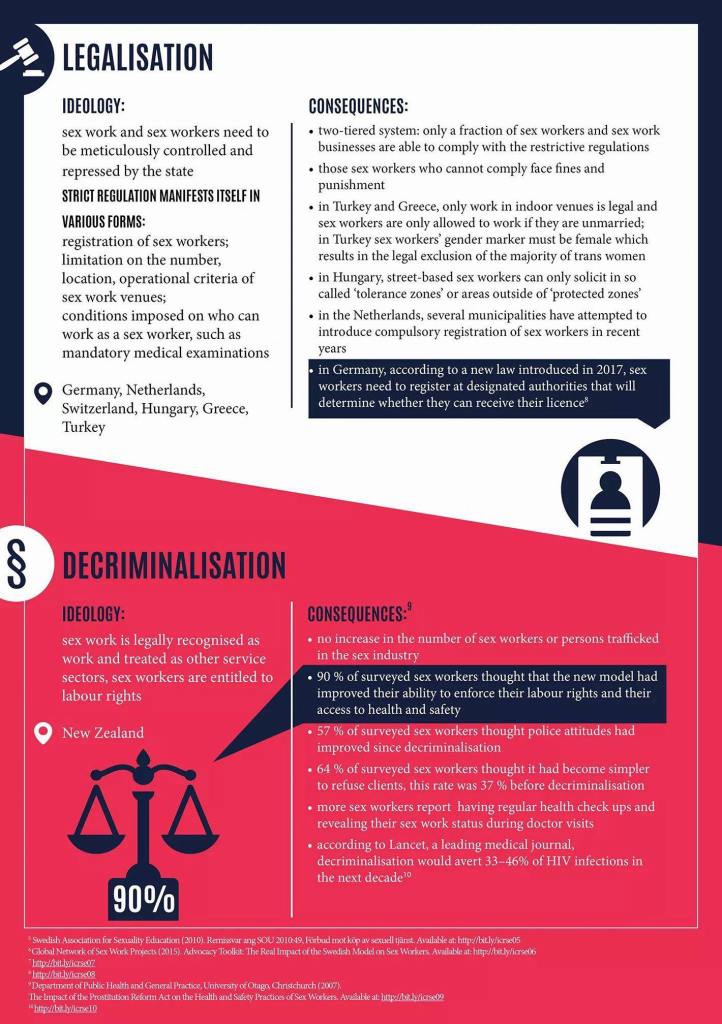
Sex workers want full decriminalization. We do not want legalization and we do not want the Nordic model. I appreciate you reaching out!

Stage name: Molly Smash

Instagram: @tkachchase

Twitter: @chasetkach

Email: chasetkach@gmail.com

Åland Islands

The autonomous (semi-independent) Swedish-speaking Finnish province of Åland is located in the Baltic Sea, at the southern end of the Gulf of Bothnia between mainland Finland and Sweden. 

The Åland archipelago consists of more than 6,500 islands – most are rocky islets, but more than 60 are inhabited. There are around 30,000 residents, who make their living primarily from tourism, maritime occupations, and banking. 

Åland’s autonomous status means that it has its own government, language, and cultural policy. Since 1922, the country has had its own parliament, as well as a representative in the Finnish national parliament. 

Finnish legislation applies to foreign policy, civil and criminal law, customs, and monetary policy. Finnish sovereignty is now perceived as benevolent and even beneficial by most of the islanders.

The Counter-Economy

The Counter-Economy is the sum of all non-aggressive Human Action which is forbidden by the State. Counter-economics is the study of the Counter-Economy and its practices.

The Counter-Economy includes the free market, the Black Market, the “underground economy,” all acts of civil and social disobedience, all acts of forbidden association (sexual, racial, cross-religious), and anything else the State, at any place or time, chooses to prohibit, control, regulate, tax, or tariff. 

The Counter-Economy excludes all State-approved action (the “White Market”) and the Red Market (violence and theft not approved by the State). As more people reject the State’s mystifications — nationalism, pseudo-Economics, false threats, and betrayed political promises — the Counter- Economy grows both vertically and horizontally. 

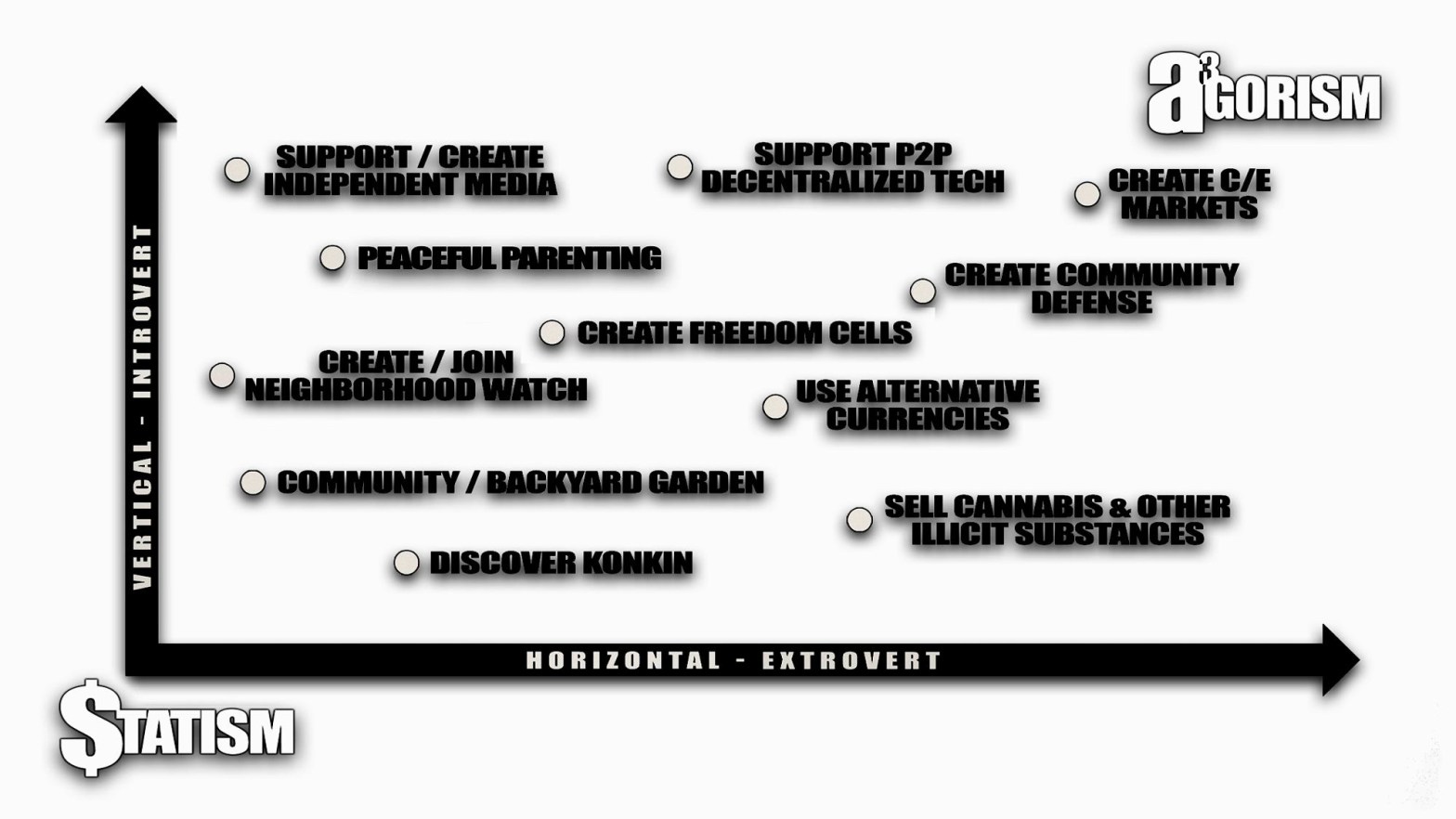
Horizontally, it involves more and more people who turn more and more of their activities toward the counter-economic; vertically, it means new structures (businesses and services) grown specifically to serve the Counter-Economy (safe communication links, arbitrators, insurance for specifically “illegal” activities, protection technology, and even guards and protectors).

Derrick Broze defines the concepts of horizontal and vertical agorism in more detail in his essay, aptly titled “Vertical and Horizontal Agorism.” In that essay, he explains that horizontal agorism, “is related to the bold choice to pursue action that the State considers to be illegal or immoral. 

“By venturing into this territory you are joining the ranks of the bootlegger, the moonshiner, the cannabis dealer, the guerilla gardener, the unlicensed lawn mower, food vendor, or barber, the weapons dealer, and the crypto-anarchists.” 

This is essentially agorism as Konkin defined it but since then it has become so much more. It is in vertical agorism that we discover a departure from the traditional agorist rejections of the white market. 

Vertical agorism is heavily inspired by the work of Karl Hess, such as his experiments in sustainability on the neighborhood level and his books summarizing those experiences, “Community Technology” and “Neighborhood Power.” 

As such, the focus is on sustainability and community self-reliance and is not restricted to only the black and grey markets. Vertical agorism would include participating in and creating community exchange networks, urban farming, backyard gardening, farmers markets, supporting alternatives to the police, and supporting peer to peer decentralized technologies. 

It includes many of the things Broze already listed when describing vertical agorism: community exchange networks, urban farming, backyard gardening, farmers markets, alternatives to the police, and p2p decentralized technologies. 

But it is so much more than that. Cryptocurrency is largely a white market venture and yet it is championed as a prime example of agorism. The Industrial Workers of the World is lauded by Konkin himself as a perfect example of an agorist labor union and yet they are legally registered with the state and more often than not organized within the law. 

Decentralized social networking sites such as Minds and Steemit, decentralized renewable energy sources, biohacking, permaculture, hacker/maker spaces, community sharing programs, alternative models of exchange including gift economies, local exchange trading systems (LETS), mutual banking, labor notes, and precious metals, alternative and complementary medicines, unschooling/homeschooling, Tor, free stores, alternative media, and worker-owned businesses are all examples of white market agorism.

In a technological landscape dominated by only a few tech businesses, free and open-source technology is counter-economic.

Non-Violent Methods #6 Group or mass petitions…

Costa Rican communities defeat U.S. oil companies to protect local environment, 1999-2002

Famous for its ecological wildlife, tropical rainforests, beaches, mangroves, and coral reefs, the Talamanca region of southeastern Costa Rica is one of the most biologically rich areas in the world.

It has gained protection as a UNESCO World Heritage Site, and ecological conservation efforts have helped spur the region’s flourishing eco-tourism industry.

In addition to fishing, coffee, and banana exports, eco-tourism is a major source of income for local communities and indigenous groups, which include the Bribri and Cabecar.

In November 1999, newspaper reports and other local media outlets informed Talamanca residents of a deal that had been brokered between the Costa Rican government and the US oil company MKJ Xplorations.

Hoping to attract foreign investment, government officials including President Miguel Ángel Rodríguez had made concessions to the foreign oil company, allowing it to drill for petroleum in the Talamancan region and along its coasts.

Angered by the fact that their communities had not been consulted in the deal, and foreseeing the ecological devastation and economic exploitation that would result from oil exploration in their region, Talamancan residents formed the Anti-Petroleum Action (ADELA) coalition to protest the concessions.

Comprised of environmentalists, indigenous groups, indigenous rights organizations, religious groups, community groups, farmers’ organizations, fishermen’s unions, small-business owners, marine biologists, and eco-tourism organizations, ADELA sought to repeal the decision of allowing oil companies to drill in their communities.

At a meeting in December 1999, about 250 ADELA members discussed this threat to their local economies and communities and drafted a declaration that opposed the oil concessions and demanded a pause to the deal.

In September 2000, after having received national attention, ADELA was able to pressure the Costa Rican Supreme Court into ruling the oil concessions to be null and void on the grounds that local communities had not been properly consulted.

Just two months later, however, the Supreme Court modified its previous ruling after government officials and MKJ (which was partnered with the Texas-based oil company Harken Energy), appealed the Court’s decision.

The Court allowed for MKJ-Harken to drill offshore where indigenous communities did not reside. Oil company representatives welcomed the ruling, understanding that most of the company’s profits would come from offshore drilling.

In addition to this legal setback, the ADELA coalition faced many difficulties. Oil company representatives attempted to garner local support for the petroleum exploration by speaking at public meetings and promising jobs to poor and unemployed residents.

They also bought up radio time to broadcast their message of ‘beneficial oil exploration’. With the additional support of the Costa Rican government, the oil companies gained an advantageous position.

The ADELA coalition addressed these obstacles by appealing to local, national, and international groups. ADELA members, who were often trusted community leaders, debated with oil company representatives at public meetings and warned their fellow residents of the dangers that were threatening their economic autonomy and natural environment.

Despite being out-funded, ADELA members also broadcasted their opposition to the oil drilling on the radio. They held many demonstrations, waving banners and signs on which they wrote “Say NO to petroleum exploration!”

ADELA’s campaign continued to raise public awareness about the dangers of oil exploration in the Talamanca region, and international support quickly began to pour in.

By January 2001, groups including the Environmental Law Alliance Worldwide (E-LAW) and the Natural Resources Defense Council (NRDC) provided ADELA with research, legal resources, financial support, and international publicity.

With their support, anti-petroleum advocates were able to send close to 27,000 emails, faxes, and letters of protest to the oil companies and Costa Rican government.

By February 2002, this continued pressure from local, national, and international groups pushed the national technical secretariat, SETENTA, into prohibiting MKJ-Harken from drilling offshore.

With research provided by ADELA and international groups, the secretariat was able to cite over fifty reasons that showed how the oil exploration would not meet environmental safety regulations.

In addition, newly-elected President Abel Pacheco signed a presidential decree in June 2002 that banned open-pit mining (however, this ban only applied to future, rather than all, mining projects).

Pacheco also supported an ADELA-drafted bill that would repeal the 1994 Hydrocarbons Law that had partitioned Costa Rica into 22 blocks for oil and natural gas exploration by foreign firms.

In response to their denied exploration permit, MKJ-Harken demanded that the Costa Rican government repay the oil company for the money it spent on the exploration.

It went so far as to sue the Costa Rican government for $57 billion in lost projected profits, but the company later withdrew its claim. Foreign oil companies, with the support of their governments and neo-liberal free trade agreements, have continued to pressure the Costa Rican government.

Although these companies have filed various lawsuits, ADELA members continue to defend local ecosystems by using both legal means and grassroots campaign strategies to fight oil development.

From Global Nonviolent Action Database.

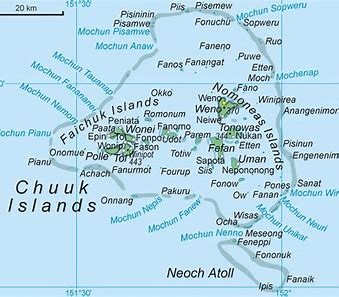
Chuuk

Chuuk is one of the four constituent parts of the Federated States of Micronesia; a collection of over a thousand islands located north of Papua New Guinea.

Having been part of the Trust Territory of the Pacific, which was administered by the United States. Micronesia nominally became an independent state in 1979.

It signed a Compact of Free Association with the United States in 1986. This means that Washington handles the country’s defense and foreign affairs and provides financial assistance.

Over the years, tensions have grown between Chuuk, which has about half the country’s population of 110,000 people, and the three other states of the Federation over the issue of state finances.

Originally, Chuuk intended to hold a referendum on independence in 2015. However, this was postponed until March 2019 over the constitutionality of secession.

This later vote was then also delayed until November 2020. However, in February 2020, it was announced that the referendum had been postponed a third time, until March 2022.

At this stage, it’s unclear when, or even whether, a vote will in fact be held. Importantly, the United States has come out against independence and has said it won’t negotiate a separate free association agreement with an independent Chuuk.

But others suspect that the country could instead look to China for funding if this happens. This adds an interesting geopolitical dimension to the issue.

Zomia

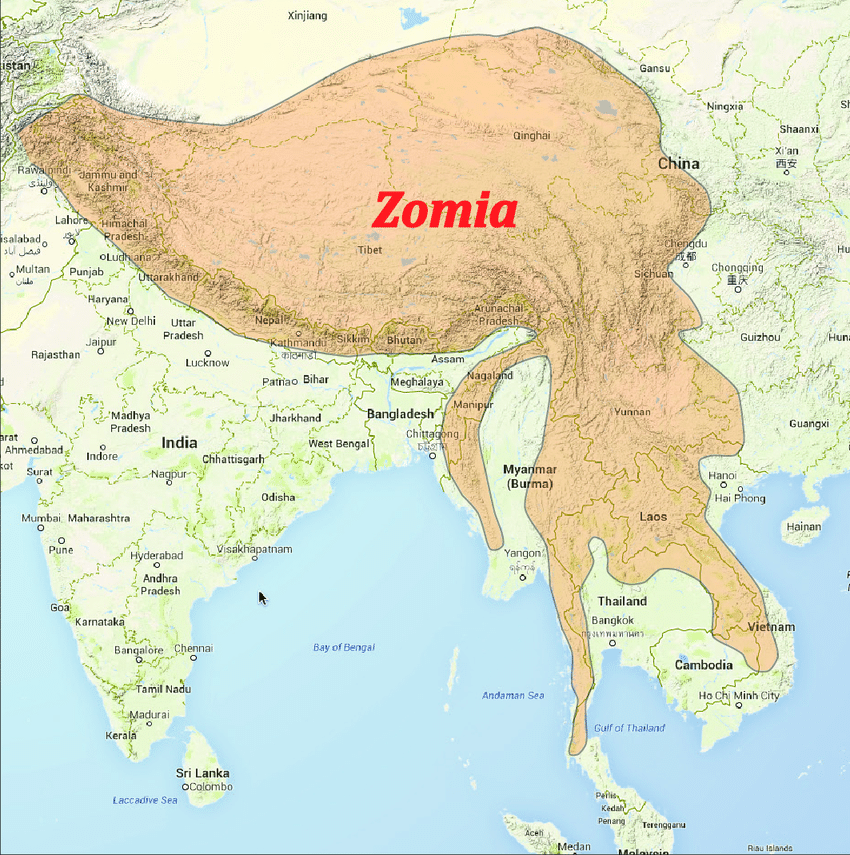
Stretching from the Vietnamese highlands and Tibetan plateau to Afghanistan, Zomia is a geographical region with a population of 100 million people whose name was coined by Willem van Schendel of the University of Amsterdam in 2002. 

Zomia is seen by some political scientists, such as Yale political scientist James Scott, as a rejection of the modern-day state and an example of an anarchist society in action.

In this region of the world, states such as China and Vietnam do not have control of these “out-of-reach” areas, and as a result, they are left to largely govern themselves. 

These cultures tend to be fiercely nonhierarchical with rules such as the Wa’s that limit the amount of wealth and power one can display. Scott also argues that this anarchist society was formed as a result of people fleeing from more traditional nation-state structures to gain more freedom. 

In one instance, he argues that the lack of written language within Zomia was a conscious choice by the natives because of the inherent bureaucracy that can arise from it.

Non-Violent Method #5 Declarations of indictment and intention

Hungarians campaign for independence from Austrian Empire, 1859-1867

In the 1840s there were high tensions between Hungary and the Austrian Empire. Hungary, a part of the larger Austrian Empire, was characterized by nationalistic fervor and that feeling erupted in a violent insurgency in 1848.

Franz Josef, the emperor of the Austrian Empire, forcefully put down the rebellion, with assistance from Russian military forces. After the failed rebellion, the repression from the Austrian Empire only increased. 

Executions were commonplace and police spies were everywhere. In addition, the constitution was withdrawn and the county assemblies of Hungary were dissolved.

Although these are all negative responses resulting from the violent rebellion, Austria’s violent repression of the rebellion increased nationalist spirit in Hungary and united the people with independence as a common goal.

Ferencz Deák spent the following years organizing his people through voluntary associations that encouraged nationalism. Throughout Hungary, there were groups promoting the Magyar language and music, as well as self-help in business and agriculture.

In 1859, Josef needed the assistance of Hungarians in fighting Napoleon III. When he saw the uncooperative Hungarian people, he learned that the nationalism he had fought to suppress was still flourishing in Hungary. 

The leadership of the Hungarian military was uncooperative and the troops were unreliable. In order to appease the Hungarian people, Josef restored the county assemblies and made a popular Hungarian general the governor of the country. 

Josef also set up a federal Parliament in Vienna with representation from all the provincial assemblies, including Hungary. While some Hungarians were satisfied with the restoration of their rights and establishment of the Parliament, most remained determined in their dream of Hungarian independence.

Following the reestablishment of the county assemblies, there were demonstrations against Austrian rule in Hungary. In addition, as a sign of protest, the newly reinstated county assemblies refused to vote for the raising of recruits for the army or the collection of taxes.

In February 1861, Josef attempted to establish a bicameral legislature for the entire Austrian Empire, including Hungary. He wanted the Imperial Parliament of Austria to have more power, but Hungary’s own parliament was still given little power. 

Following this announcement, the Hungarian Parliament met and sent a message to the Emperor stating that Hungary would not recognize the right of the Imperial Parliament to legislate Hungarian affairs. 

The Hungarian Parliament argued that they would cooperate with Austria only if the Austrian Empire would recognize the ancient Constitution of Hungary, with the emperor becoming a constitutional monarch.

Following this statement by the Hungarian Parliament, Josef responded by dissolving the Hungarian Parliament. When the leading county assembly protested, Josef dissolved that assembly as well. 

Despite this order by the emperor, the assembly continued to meet until Austrian soldiers entered their meeting chamber and physically carried out the members of the assembly in August of 1861. 

Following the eviction of the assembly members by the Austrian troops, a supporting crowd of Hungarians gathered outside the chambers. The crowd then held a march through the streets, eventually ending up at the home of the chairman of the council who declared “We have been dispersed by tyrannic force—but force shall never overawe us.”

As word of this action spread across Hungary, the notion of Austrian resistance became a nationwide phenomenon. The Hungarians in the bureaucracy refused to transfer their jobs to the Austrians, which left the administration in chaos. 

Ordinary Hungarians who did not have bureaucracy positions refused to pay taxes to the Austrian Empire and also boycotted Austrian goods. As such actions spread throughout the Hungarian population, Deák emphasized the importance of nonviolence and constitutional legality. 

For example, when an Austrian tax collector came to collect money, Hungarians told him that he was acting illegally and continued to refuse to pay.

When the police were called to seize the goods of protesting Hungarians, the Hungarian auctioneers refused to auction the goods. Naturally, Austrian auctioneers were brought in, but the Hungarian people refused to bid.

To combat these actions of protest, Josef imposed martial law and began repressive actions against protesters. He declared the boycott of Austrian goods illegal, and soon boycott organizers were overflowing the prisons in Hungary.

Josef also began stationing Austrian soldiers in Hungarian households in an attempt to destroy the resistance. Unfortunately for Josef, this lowered soldier morale more than it hurt the movement, and resistance continued.

Furthermore, Josef attempted to appease the nationalist movement by granting the boycott organizers in jail amnesty as political prisoners. In response to this, the Hungarians added a new verse criticizing the Austrian Empire to their satirical song, “The Austrian Thieves.”

In the years that followed, the resistance continued. New nationalist literature was written, and the voluntary associations became the informal government of Hungary, with Parliament using the groups to spread news and policies throughout the country. 

This continued even during an economic recession in 1863. On June 6, 1865, Josef visited Pesth, the capital of Hungary. There were only a few Hungarians who displayed flags of the empire because so many others were part of the nationalist movement that opposed the Austrian Empire. 

The governor of Pesth was pro-Austrian and thus encouraged the whole city to fly the Austrian flag. Rather than displaying the flag of the empire, however, Hungarians across the city displayed the green, white, and red official flag of independent Hungary.

What greatly helped the Hungarian nationalist movement was the conflict brewing between Austria and Prussia. In an attempt to satisfy Hungary, Josef reestablished the Hungarian Parliament. 

This was followed by the resumption of the Hungarian Parliament sending demands to Josef for the restoration of the constitution and county assemblies.

Josef, pressured by the full-scale war he was waging with Prussia, attempted to gain Hungarian support in the war by promising autonomy. The Hungarians remained opposed to assisting Austria in the war, even after Josef mandated the conscription of Hungarian people for service against the Prussians.

He eventually gave up in his efforts to gain support from the Hungarian people. On June 8, 1867, Franz Josef was named the King of Hungary after he agreed to rule as a constitutional monarch with the restored authority of the Hungarian Parliament over Hungarian affairs. 

When Ferencz Deák was offered the position of Hungarian Prime Minister, he refused because he wished to continue to serve his country in a quieter lifestyle.