Sean Leal

ConsentIsMorality.com

JE: Thanks for the add! I was wondering if you’d be willing to like my page Self-determination Advocates. We’re eager to help everyone achieve self-ownership, Does that sound like something you would be interested in? https://www.facebook.com/SelfDeterminationAdvocates/

SL: “Achieve” self-ownership? That makes no sense to me because I believe self-ownership is an innate human quality. My whole philosophy can be found in my book Consent Is Morality.

JE: What is your book about, Sean?

SL: Using fundamental logic, it proposes that consent is a universal human concept, and that respect for consent choices is the basis for all moral actions.

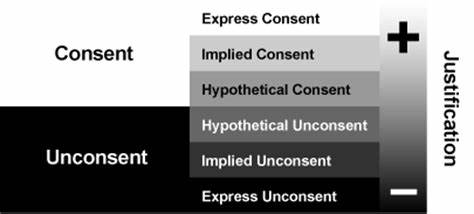
JE: Have you read, “Your Next Government: From Nation-States to Stateless Nations” by Tom W Bell? He goes into detail about the different levels of consent.

SL: No, I haven’t. But I would disagree that there even are “levels” of consent, and I argue as such in my book. Consent is purely individual (cannot be granted by others without previous agreement) and binary — it has either been given or it has not.

JE: His argument is similar… This chart is based on common law tradition.
Are you a libertarian or classical liberal? I think I saw you identified as a voluntaryist?

SL: Interesting chart. I argue that implied consent is not possible, as it either makes assertions or assumptions, neither of which speak to an individual’s consent choice.

Yes, I’m a voluntaryist. I believe in the primacy of property rights. 

JE: The charter city movement is working to make consent more explicit. How did you become a voluntaryist? and what does that mean to you?

SL: It was a slow process. I was a Reagan Republican in the 80s, but after Bush Jr’s lies, I started reading a wider variety of material, including Radley Balko and the Cato Institute.

It occurred to me that there were still inconsistencies in their philosophy. Roger Pilon put it best — you can’t give away [rights or powers] which you first don’t possess. But I wondered how someone who believed that could also believe in the validity of the Constitution.

Voluntaryism — the simple view that only mutually voluntary acts are moral — is the most consistent viewpoint.

JE: So why did you write this book, Sean?

SL: It’s all in the preface. 😉 Ultimately I got sick of the “subjective morality” arguments. They didn’t sit well with me. So I sat down to think about WHY one act was “good” and another act was “bad.”

I came up with a way to equate consent with morality which I don’t think anyone else has used.

JE: Where can people buy your book?

SL: People can get it at ConsentIsMorality.com. And for your readers, the first 10 people to use the code SDA30 will get 30% off an autographed copy.
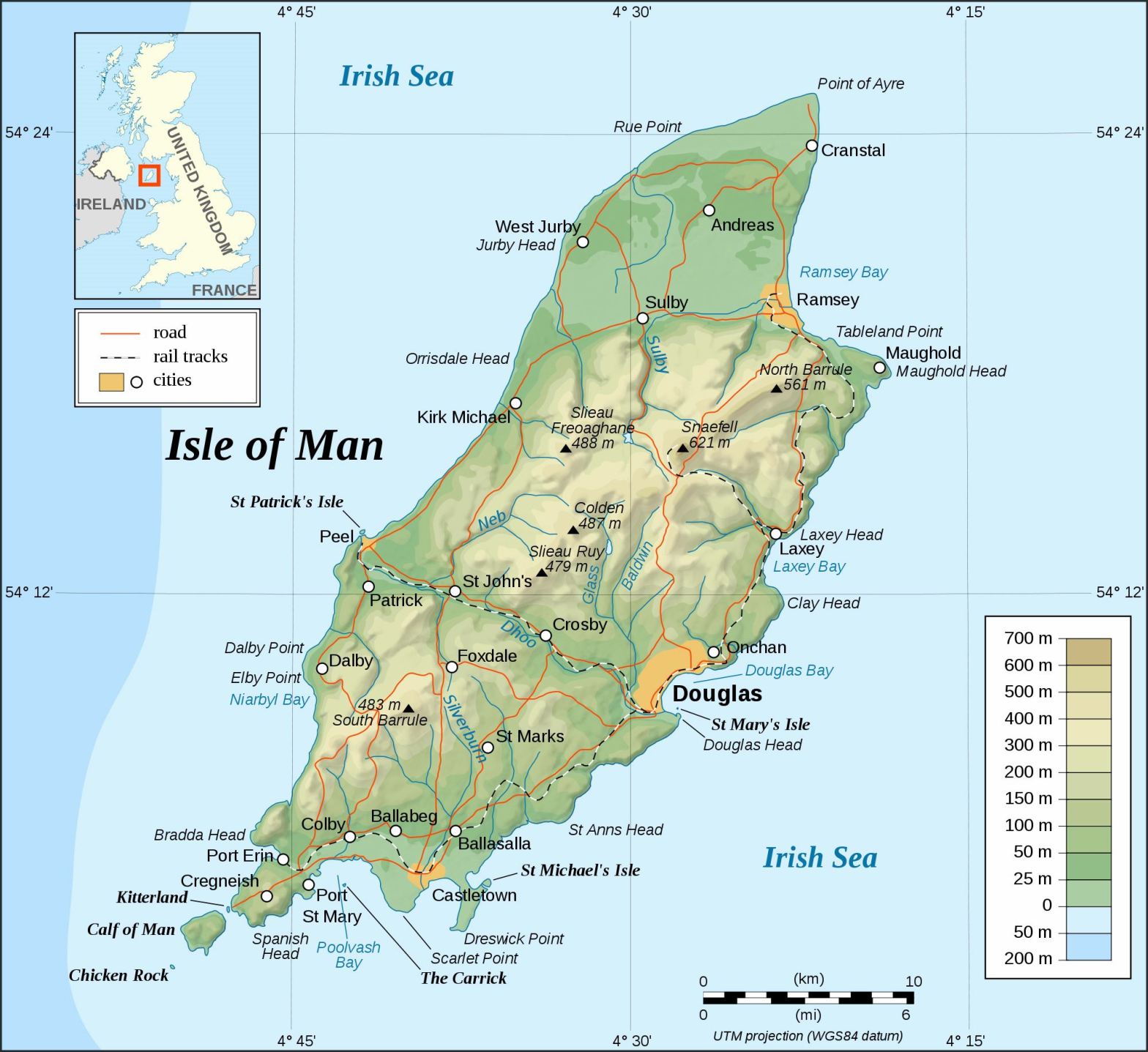
The Isle of Man

The Isle of Man is a self-governing British Crown Dependency in the Irish Sea, with a population of 85,000, its own tricameral parliament, the Tynwald (the world’s oldest continuously operating democratic assembly), its own language and legislation. 

The state only fairly recently legalized same-sex relationships, made seat-belts compulsory for motorists, and outlawed birching as punishment, but still has not introduced speed limits on the roads outside its capital, Douglas. 

Once a major maritime power, the island governs its own domestic affairs and raises its own revenue, but makes a financial contribution to the UK for its defense and international representation.

Apart from having a well-functioning financial system and being, like most offshore British dependencies, a tax haven, the Isle of Man has a rapidly expanding manufacturing sector, with a number of precision-engineering, aerospace, IT, and other companies, largely responsible for the microstate’s 25 years of uninterrupted economic growth and the fact that it’s per capita income is almost twice as high as in the UK. 

The island’s motto, represented by the three-legged Manx symbol, or Triskeles, is Quocunque Jeceris Stabit, which, translated from Latin, means ‘whichever way you throw me I stand’, or – in a somewhat looser version – ‘Weebles wobble but they don’t fall down’. 

There is no consensus as to the origins of the island’s name, but all connections with the human male are irrelevant. ‘Man’ in this case originates either from Mannanin Beg Mchir, the legendary wizard-king of the Vikings or from Mona, the name given to the island by Julius Caesar. 

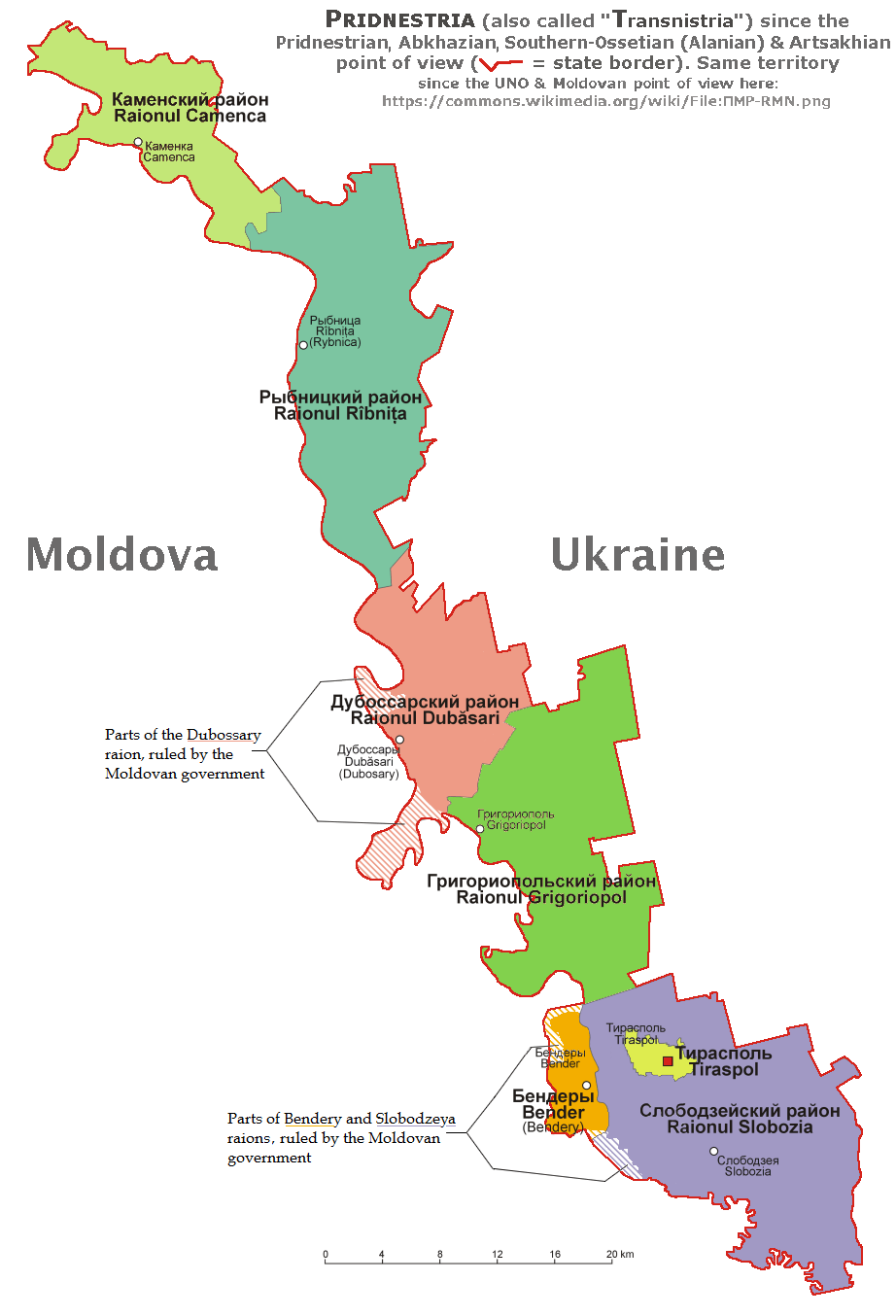
Transnistria

In medieval times, the Romanian Principality of Moldova was an Ottoman vassal state. However, in 1812 the eastern part was handed over to Russia. In 1918, following the Russian Revolution, Moldova declared independence and united with neighboring Romania.

This led to the establishment of an alternative Soviet Moldovan administration on the east bank of the Dniester River. When Moldova was conquered by Russian forces during the Second World War, these two parts were united to form the Moldavian Soviet Socialist Republic – one of the 15 constituent republics of the USSR.

As the Soviet Union weakened, the eastern part of the republic, Transnistria, sought to become a separate republic within the USSR. When this option became obsolete with the collapse of the Soviet Union, it instead proclaimed independence.

In March 1992, the government of the newly independent Republic of Moldova attempted to take back Transnistria. However, this was thwarted by Russian forces in the territory.

Today, Transnistria exists as a de facto state. But, unlike other cases where Russia has intervened, it remains wholly unrecognized on the world stage. Indeed, even Moscow hasn’t recognized it.

Looking ahead, given that peace talks are focused clearly on reunification, most observers believe that it will eventually be reunited with Moldova. Indeed, in many ways, it’s perhaps the most likely of all the de facto states to be eventually resolved by the territory’s reintegration into the parent state.

Northern Cyprus

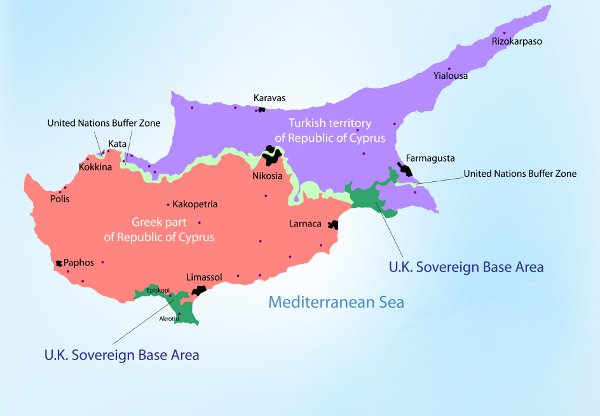
After the Republic of Cyprus became independent, in 1960, following 80 years of British colonial rule, relations between the island’s Greek and Turkish Cypriot communities, representing 78 and 18 percent of the population respectively, quickly broke down.

Following the outbreak of fighting between the communities in December 1963, a UN peacekeeping and peacemaking mission was established. In 1974, the military government in Greece tried to annex the island, prompting Turkey to invade and occupy the northern third of Cyprus.

In 1977, the Greek and Turkish Cypriots agreed that reunification should be based on a federal solution. Despite this, in November 1983, the Turkish Cypriots unilaterally declared independence.

While the Turkish Cypriot state was immediately recognized by Turkey, the move was condemned by the UN Security Council, which passed Resolution 541 calling on countries not to recognize the so-called ‘Turkish Republic of Northern Cyprus’.

Despite this, UN efforts to reunite the island have continued. In 2004, a settlement plan was rejected by the Greek Cypriots. Meanwhile, another major UN-led settlement effort collapsed in 2017.

Although both sides officially remain committed to reunification, the prospects of this actually happening appear to diminish with every passing year.

Sharon Presley

https://www.facebook.com/sharonpresley.writer/

SP: Please don’t forget about women libertarians. All I see is guys on your page. Feature women on those pages too. Victoria Varga, for example editor for Libertarian Review

She is still around and on FB

JE: I will try to interview more women. How did you become libertarian, Sharon?

SP: I read Atlas Shrugged. Then became active in college at UC Berkeley.

JE: How old were you?

SP: 18

JE: So, how do you feel about Ayn Rand today?

SP: I think Rand had a lot of good things to say but had some blind spots. I appreciate the former and accept the latter.

JE: Did you enjoy being active at Berkeley?

SP: There was a conservative group but we libertarians always knew we were different. One of my fellow libs is on my FB today, BTW

JE: Was that after the free speech movement at Berkeley?

SP: I was there for the FSM

JE: YAF?

SP: No not YAF. Cal Conservatives for Political Action. Then the libs started the Alliance of Libertarian Activists.

JE: Yes, those were historic times at Berkeley I hear, I wasn’t there…

SP: I must record my thoughts on those times!

JE: So, how have you grown as a libertarian since those times?

SP: I have always been tolerant of other views. That has only grown. Maybe it’s because I am a psychologist and understand that people can have different values and still be good people.

JE: What “type” of libertarian are you?

SP: HAHA I hate that question because my view is mostly–let’s see what works. . I see anarchism as merely a lack of monopoly force. There must always be ways to protect people against coercion.

There would be ways in even an individualist anarchist society. Maybe it could work at some point in the future. Certainly not now.

JE: Yes, I understand… So, you see anarchism as a lack of monopoly force. What are your views of an ideal society and world?

SP: Yes, The idea that it is simply people running amok is silly. Not what the anarchists have ever said. I have read many of the Individualist anarchists.

JE: Who is your favorite individualist anarchist?

SP: Lysander Spooner

JE: What is it about Spooner?

SP: 1) He pointed out that none of us have actually agreed to the documents that we are obligated to abide by–he was a lawyer and figured that out.

2) He started a private post office that was much more efficient than the govt one so they closed him down.

JE: What if JO isn’t elected in November? How do I move the group from “party” mode into “agorist” mode?

SP: You mean the LP? Probably would require a change of personnel. I don’t like the LP very much. It’s not my kind of activism. I’m a writer.

JE: No, I mean the Self-determination Advocates group.

SP: Let me think about that;  I live out in the boonies where there are probably about 3 other libertarians besides me and my partner Art.

JE; will there be grief after the election?

SP: If Trump wins, yes!!

JE: Did I ask you about an ideal society/world?

SP: I’m a psychologist. I don’t think there is any such animal.  🙂

JE: Hehe, Utopia is nowhere! What advice do you have for new libertarians and the curious?

SP: Read the libertarian classics–  “The Libertarian Reader” by David Boaz especially. Depending on the level of interest and background, also Spooner, Tucker, Frank Chodorov.

JE: So, you are a psychologist and writer. Remember Nathaniel Brandon?

SP: Yes, I had lunch with him once. I like his ideas about psychology very much.

JE: What do you write about?

SP: I have two books–one written and one edited plus dozens of essays for libertarianism.org

https://www.facebook.com/sharonpresley.writer/notes

here are the ones I did for libertarianism.org:

https://www.facebook.com/notes/sharon-presley/my-essays-at-libertarianismorg/

JE: I recently ran across Étienne de la Boétie

SP: Ah, you saw my essay…

JE: Have you ever read “How I Found Freedom in an Unfree World?”

SP: Of course, I knew Browne personally. I liked the book.

JE: Do you think the party is a group trap? How much freedom can we attain outside of politics?

How much of it is just in our heads? I’m not good at expressing myself sometimes.

SP: I think that many of them are stuck in a way of thinking that is old and not helpful. They need new ideas. They need to be doing things like what I describe on my page Compassionate Libertarianism

https://www.facebook.com/compassionatelibertarians/

Anonimo asked that we not use his name because of the situation in Argentina

Anonimo asked that we not use his name because of the situation in Argentina

Anonimo: That will help us in Argentina

JE: What can I do to help?

Anonimo: The fascist government today will hold a loyalty march. And on 8N they will go out to kill the liberals who march against this government. They said it themselves

JE: Argentina, Freedom 6.47 #107, Economic #148, Col 36.41, LP – Liberal Libertarian Party https://liberallibertario.org/; EFN Fundación Libertad Website: http://www.libertad.org.ar; Libertad y Progreso Website: http : //www.libertadyprogreso.org; 

New Country Project; Arauco; Proposed State: Patagonia, Pressure Group: Patagonian Independence Movement, Proposition: Secession of Argentine Patagonia.

Proposed State: en: Wallmapu; Pressure Group: en: Council of All Lands, Proposition: Self-determination for the Mapuche people.

Anonimo: Our minimum wage is less than Haiti’s. Besides property is not respected

JE: Are they going to kill all the classical liberals on November 8?

Anonimo: They call it idea basicamente (the basics?) And the Mapuches kill and usurp private property. And gays get subsidies.

And that’s why besides communism I hate gays.

JE: They don’t respect property rights or the rule of law?

Anonimo: None, The shots in Guernica’s are supported by the left. And they get into people’s houses. They stripped the army of Bariloche. And the ERP came back and is supported by the government

JE: The People’s Revolutionary Army (Spanish: Ejército Revolucionario del Pueblo, abbreviated as ERP) was the military branch of the communist Partido Revolucionario de los Trabajadores (PRT, Workers’ Revolutionary Party) in Argentina. …

Anonimo: On 8N the communists will go out to kill liberals.

JE: The Mapuche Indians don’t believe in private property, I know. Does the government subsidize being gay?

Anonimo: Yes, And it also subsidizes years. And people for having children. In short, they give away money without stopping to stay in power.

JE: It seems like a lot is happening. Can I post our conversation on my page?

Anonimo: Without my name, yes. Is that if you publish with my name, I am dead later. The problem is that there are many young people who support this.

And they say it is the imperialism of the USA, long live Che Guevara, and the revolution. The Peronists are Nazis who joined with the Communists. March in support of the government in the elimination of private property.

JE: Ok I will post it anonymously.

Anonimo: March in support of the government in the elimination of private property. I think you must see a military intervention from nato.

JE: Is there any way to get out of the country, visit “relatives”?

Anonimo: We can not; prohibited from leaving even from the provinces. But gays and Mapuches can do whatever they want. In short only if you are from the government.

They censor the Internet!

South Yemen

Having effectively been a British colonial holding from the mid-19th century, the territory became independent in 1967 as the People’s Republic of Southern Yemen.

From the start, it was expected that it would eventually unite with the neighboring Yemen Arab Republic, which had been an independent state since 1918.

However, the unification process proved difficult; not least of all because the South fell to communist forces in 1969. Despite efforts to broker unification, no progress was made until the late 1980s, when a series of factors, including the gradual weakening of the Soviet Union, which supported South Yemen, and economic problems, made a merger desirable for the leaders of both countries.

On 22 May 1990, North and South Yemen, as they had become more generally known, formally ceased to exist and the new Republic of Yemen was created.

However, from the start, it was an unhappy union; not least of all because the two parts of the country had had very different histories. In 1994, the South unilaterally declared independence.

However, this went unrecognized by the international community and the country’s central government managed to reimpose its rule quickly. In 2015, Yemen was again plunged into conflict.

Although this wasn’t directly related to the South’s claim to statehood, the pro-independence Southern Transitional Council has managed to take control of parts of the south.

Looking ahead, it will hope to be able to use this as a basis to press for a return to independent sovereign statehood on the international stage at some point in the future.

Nagorno-Karabakh

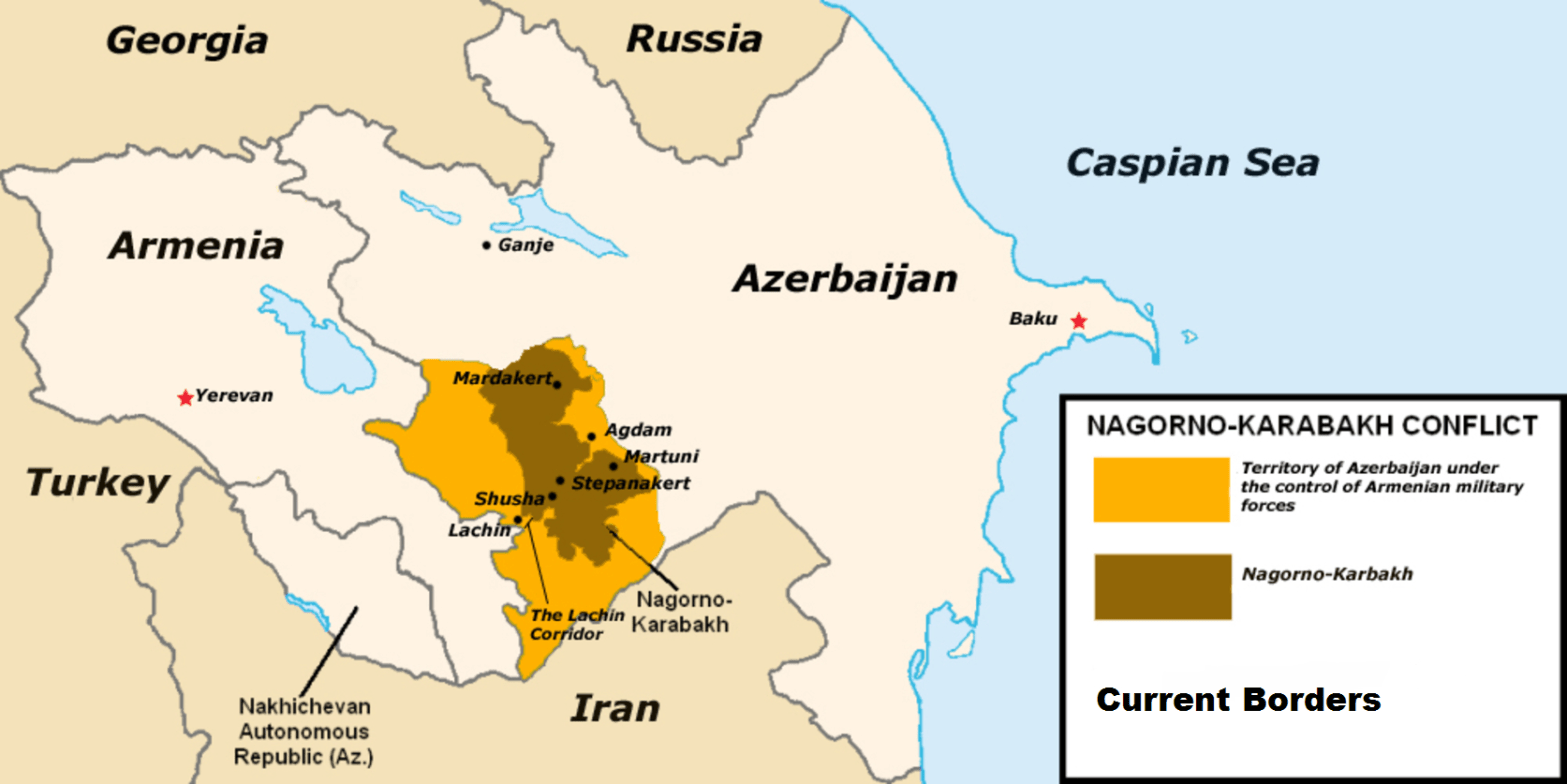
The region became part of the Russian Empire at the start of the 19th century. However, following the Russian Revolution in October 1917, it was awarded to the Azerbaijan Soviet Socialist Republic as an autonomous region – a decision opposed by the neighboring Armenian Soviet Socialist Republic and by the Armenian inhabitants of Nagorno-Karabakh.

In September 1991, as the Soviet Union collapsed, Nagorno-Karabakh provisionally declared independence. In response, the Azerbaijani Government rescinded its autonomy and launched a military assault to end the rebellion.

In January 1992, following a referendum, it formally declared independence as the Nagorno-Karabakh Republic. Stepping up its military offensive, Azerbaijan recaptured much of the region.

However, the following year, Armenian and Nagorno-Karabakh forces not only retook the land that was lost, but they also captured a large swathe of territory around Nagorno-Karabakh, which still remains occupied by Armenia to this day.

Despite this, Armenia and Azerbaijan have agreed on a set of principles to resolve the conflict. These include returning territory to Azerbaijani control, opening a land corridor between Nagorno-Karabakh and Armenia, and determining the final legal status of Nagorno-Karabakh through a legally binding expression of will.

To date, however, the conflict remains unresolved. More to the point Nagorno-Karabakh remains wholly unrecognized on the world stage. Indeed, it isn’t even formally recognized by Armenia; not least of all because Azerbaijan’s territorial integrity has repeatedly been reaffirmed by the UN Security Council.

In the meantime, there’s a genuine worry internationally that the dispute may well lead to war, not least of all because Armenia and Azerbaijan have been caught up in an arms race and have also occasionally engaged in serious fighting, most recently in October 2020.

Marty McAncapistan

Marty McAncapistan

https://brisbaneroboticsclub.id.au/investments/

MM: Shoot some guns for me…

JE: In OZ you have to belong to a gun club or some such?

MM: Country cousins have guns… Depending on the gun, depends on keeping your gun time up. Hence gun clubs.

JE: You have cousins with guns?

MM: Yeh… I’m from the country; Live in the city, Brisbane.

JE: Do they monitor how much time you spend on the range?

MM: For handguns, yes… need to do min hours to keep them…

JE: You classical liberal or anarchist?

MM: Need to keep in safes etc. Anarchist; I don’t need a master.

JE: How did you become anarchist?

MM: I trade the share market. Learned about fed reserve truth. Here I am; I woke myself up.

JE: You are a trader?

MM: Yup, Up 45% this yr. Index funds. New system out soon…

JE: Good job… I do that Harry Browne Permanent portfolio. You have a “new system?”

MM: Watch this: Superannuation Re-balancing Strategy Testing complete…

JE: It’s weird Human Freedom Index says Oz is freer than the USA, but we have the second amendment here. Comment?

MM: BS. The US is freer.

JE: Do you know much about the Swiss central bank? Why is it the freest countries have central banks? The only ones without a central bank are Iran, North Korea… etc? Swiss do it better than the US!

MM: It?

JE: Central Banking. Most everything; even cookoo clocks.

MM: Depends on what you want…

JE: So, you are a day trader?

MM: Nah, Index funds. Maybe 1 trade every 6 months. Average 3-4 a yr.

JE: Got you, you said that…

MM: Elephant trader

JE: I trade once a month; when I get my pension.

MM: In what??

JE: ETF; Harry Browne’s permanent portfolio.

MM: Cool, what’s your day job?

JE: Retired… you?

MM: I mean… what’s your background? I was Mech Eng.

JE: Kinda Agorist…

MM: Then financial planner. Yup, trees.

JE: Bunch of measly ass minimum wage jobs…

MM: Now, full-time strategic inv consultant.

JE: Worked 6 months/year so I didn’t have to pay income tax

MM: Ok… So, you do tech or fundamental analysis??

JE: Did some freelance writing for business journals, Some concert promoting during the ‘80s, tried my hand at a lot of things… sometimes I would go back for a second day! LOL! Supported myself; Stayed out of jail. 

Not sure I should be proud of that. What’s your system? So you are a ME? That must be fascinating.

MM: Was… Not since 2012.

JE: Got tired of it?

MM: No work; All in China.

JE: I see, so you read about the central banks and that changed you?

MM: Yup, Zeitgeist video Then 9-11 was next. Rabbit hole; Entered.

JE: How have you grown since then?

MM: Lots.

JE: Was it a specific video?

MM: That was in 2007. Youtube zeitgeist “Federal Reserve.” Prob gone now.

JE: So any advice for a new anarchist or the curious?

MM: Everything you know is a lie; All a game. You’re a patsy.

JE: Start there?

MM: Or get in on it. I hope they keep printing money… Ends up in my funds… My system works on any investment, Bitcoin, funds, shares, etc

Face of Liberty International

Leonard Adeyinka OGUNWEIDE  

Face of Liberty International (FLI)

(www.faceoflibertyafrica.org)

I have always had a flair for equal justice, individual human rights, limited government, and freedom of speech from when I was a kid. Coming across the liberty movement in 2013 through African Liberty Students Organisation in my school looks like a platform to actually bring my inner voice out.

I swung in and became active In the movement. I volunteered with Students For Liberty from 2014 – 2020. Graduated from Atlas Network in 2019. Currently, I run my own libertarian Think-tank in Africa called Face of Liberty International (FLI) (www.faceoflibertyafrica.org)

My vision for FLI is to live up her name and become the notable face of liberty in Africa by putting the song of freedom on the lips of all Africans. Plans: At FLI, we are focusing on four ways to actualize our dream objective:

1) FLI Media Channel

FLI Media channel on Youtube called The Liberty Show with Leon is used to dish out information about Free Market, Entrepreneurship, Book Reviews, and recommendation to our listeners and subscribers.

2) FLI Outreach events can take on any type of format that best suits the location and situation. Popular events hosted by FLI include policy-based discussions, practical educational skills, self-defense classes, hosting a Speaker/Professor/Local leader, discussions on local issues, and movie screenings. 

Social elements to these events allow attendees to connect, build relationships, and promote the ideas of liberty.

3) FLI Leadership Training

Active leaders with FLI are invited to participate in our annual FLI Leadership Retreat. Previous training topics include Writing op-eds, on-camera media training, personal branding, reaching out to your school board/church/political party about liberty, public speaking, and more.

FLI provides skills-based training to help leaders reach their personal and professional goals and become strong communicators of libertarian ideas. Training is offered virtually around the world.

FLI is always looking for educators and opportunities to provide training to liberty-minded individuals. Please contact info@faceoflibertyafrica.org if you would like to volunteer as an instructor or provide a space for us to hold a training in your area.

4) FLI Speakers Bureau

FLI provides an invaluable tool to event producers and organizers by offering a searchable database of over 70 leaders available to speak throughout the world on a variety of issues. 

FLI promotes the work of Speakers Bureau members through regular updates and social media. To be included in our FLIs Speakers Bureau, please send an email with your information and examples of your work to info@faceoflibertyafrica.org.

What Challenges do you face?

First, as it is common for any start-up think-tank or any organization especially in the continent of Africa, the starting fund to run most of our laid-down activities is not available.

Second, we have limited volunteers to work with.

How can we help?

We need donors, angel investors, patrons, and sponsors/partners for what we are doing and intend to do at FLI to drive societal change. We want more volunteers from around the continent of Africa and beyond to share in the vision of FLI.