Anne Lambert

I became a Libertarian back in 2015. I had met a man who had been taking care of his Grandmother who had Alzheimer’s. As we grew our friendship he would point out things in my belief system that were not Republican as I was raised and had voted. 

I never felt like I belonged to the party. Yet in 2012 I had turned 18 and voted Republican because I never believed in socialism. I didn’t even know other parties existed. So my friend kept informing me I was Libertarian. 

I was confused and blew it off. After a while, he asked me to take the political compass test. I eventually did and when the results suggested I was Libertarian I began to ask questions about the party and investigate it. 

I wasn’t about to just assume an online test was correct. I quickly realized I was Libertarian as we discussed it. I became excited realizing how it was so common sense and could be applied to everything successfully, even my religion. 

Thanks to my friend who is now my fiance I found a passion for freedom and the party that offers it. I don’t know how exactly I would label my Libertarianism.

I’m a Christian Libertarian but I feel that both go so naturally together with each other. I believe the core to Libertarianism isn’t as purist’s see it. I believe it is simply the belief that we are all different in beliefs and desires which makes no difference as long as we don’t hurt one another. 

The way there are Democrats and Republicans who happen to also be libertarian. There are people from a broad spectrum of political beliefs and religious beliefs that are libertarian.

Their beliefs are not in conflict with being libertarian as long as they are allowing other individuals to live freely and not forcing their own beliefs on them. 

If a group of people wants to live similarly and contribute to the idea then they should be allowed to, but that does not mean that anyone should be forced to. 

Honestly, if more people realize that then the Libertarian Party would grow much quicker. Republicans and Democrats constantly vote out of fear that their ideas will be taken away if the other party wins.

The truth is though, we could all just live how we want to live. We don’t have to do anything that we don’t want to and we can contribute to the things we want to contribute to. 

Freedom isn’t a matter of everyone saying no to government; it’s a matter of everyone doing what they want to, freely without any others forcing them. I would like to see a national media geared toward libertarianism. 

Both televised and on the radio. We are locally growing our elective officials but we need a way to stop the duopoly from locking us out. The only way I see this happening is if we have our own media.

Well, for the country I would like to see a truly free market take place. I believe that individuals should have a chance to get goods and services from the free market if they want.

However, I understand that there are individuals that want government and a ruling class. If they want to pay taxes and live under the rules of a separate society I believe they should be allowed to.

However, it should be a choice and only those who voluntarily want to be a part of that system should participate. Everyone else should live the way they see fit as long as they’re not causing harm.

I have written multiple papers on switching social programs, police, the medical system, infrastructure, and more to a free market society without taxes. 

I strongly stand by that. With that said, I understand that some individuals are just simply more comfortable having a system that they pay into and receive goods and services for.

I personally know that it’s not effective and efficient but I would never tell anyone that they could not live that way.  However, I cannot stress enough; they cannot tell anyone that they have to live that way either.

Once the world sees that the United States can thrive off libertarianism and multiple belief systems and religion and politics come together to make this country stronger, they will want to follow our example. 

However, we have to show them how freedom works so that they will voluntarily work towards it themselves. These changes are going to come from the grass-root movements.

It’s going to come from small parties coming together so that they can actually be on the stage and be heard nationally. It’s going to come from people donating and working to make a national media for Libertarians.

It’s going to come from pushing ballot initiatives that promote freedom. Therefore even if our candidate doesn’t win we are still making a change. A huge thing is stopping straight-ticket voting.

Another large part is ensuring that everyone has the right to debate and that the public is educated. I believe that to be on the ballot every nominee should be debating nationally.

If you have enough ballot access to win the presidency then you automatically should be allowed to debate. If you refuse to debate because you do not want to have an educated population you should not be on the ballot as you do not have the country’s best interest in mind. 

Americans should be educated. Our system should make it easy for people to be educated. The duopoly has clearly taken over the debates when they stole it from the League of Women Voters. 

The ability of them to keep third parties from debating is what made the league leave the debate mission. They warned of the radical two-party system if third parties were not allowed to debate.

With that said you can actually see that before the duopoly took over the debate commission that it was common for Independence and third-party nominees to get 20% plus during an election. 

The only reason we don’t get that now is because of the media blackout and we lost our rights to debate. So by ensuring that everyone who can win the election by ballot access will be able to debate and must debate or be stripped from the state’s ballot we will ensure Fair elections. 

We can pass such a law state by state to ensure this. Another initiative I think needs to be done is individuals need access to their ballots after they vote.

An official copy should be given to the voter so that if any party believes there is an issue they can freely do their own count and prove fraud or if there needs to be a recount. 

If there is something wrong with the count then the official valid copies will prove it. Self-determination Advocates, you can help in a few ways. The first and probably the most obvious is educating voters. 

Secondly is fundraising to work on producing our own media sources across the Nation. Thirdly helping people set forth ballot initiatives that promote freedom, Fair debates, and fair elections.

Each state has a different complex set of rules to get an issue on the ballot. So even when individuals want to, it can be complicated and discouraging.

However, if we were able to help individuals state by state get these initiatives set up we can make a lot of change even if we don’t get libertarian nominees elected.
Caly P Tratus

Agorist Voluntaryist

I’m Ancap/voluntaryist/Objectivist. I started at 14 as an undefined anarchist through 80’s punk culture, read the leftists but never liked them (Bakunin, Goldman, Proudhon, etc,) but found Thoreau at 16 and stuck to individualism ever since. 

I’m Swedish living in Spain, so if you refer to the US, I have no vision, just hope you are saved from socialism and keep 2A at any cost.

I’ve been living as an agorist for about 10 years now, never file income or taxes, no traceable contracts to my name to speak of, no debts, no rents.

So my answer should be “A hardcore small l libertarian” I suppose 😁

Hugh McNichol IV

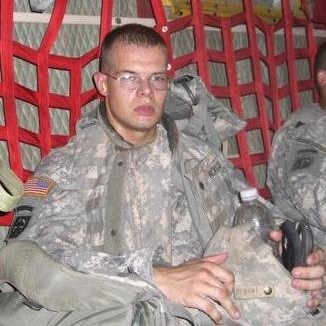
Proud Father, ASE Master Certified Mechanic, Entrepreneur, Iraq War Veteran.

I’m not a Libertarian.  I think that diplomacy should be prioritized and does better in most cases than our military can do.  We should have diplomatic relations with everyone, including self-determination groups but we should prioritize our friendships with those who share our views on human rights, rather than those with resources.

Marshall Beerwinkle

Liberty-the mother, not the daughter of order. -P J Proudhon

I have always been a libertarian. Like Voltarine de Cleyre said, some of us are just born that way. Growing up as an Army brat in the ‘50s and ’60’s, living around the country, and in Okinawa in high school during the Vietnam War, broadened my perspective of the world.

What kind of libertarian? ’60’s libertarian. Parts Old Right, New Left (just a tincture), 19th Century Individualist, classical liberal, laissez-faire to be sure,  but interested in social movements and people like Saul Alinsky, Emma Goldman, and others who want to push society freely in directions not beloved by certain pure market theorists….as in a cash nexus for everything. 

That does not mean statism. Not interested in violent social movements to affect change. But they should be studied to avoid them.

Chris Childs

Former Director of Production at Newsmax

Former Director (company) at TheBlaze

Former video production manager at Christ Chapel Bible Church

Lives in Arlington, Texas

From Odessa, Texas

I came to be a Libertarian by way of listening to Penn Jillette on his podcast. I had felt like the republicans were changing back in 2012 and I vowed to not settle again.

Then when Trumpy Trump came on the scene I saw the total transformation of the party and I was done. I couldn’t vote for Gary Johnson but knew where I was heading in terms of party affiliation.

I think from this point forward the party needs to grow from the bottom up. We need more quality candidates at the local level and build upon that. If we can’t elect Libertarians at the local level we cannot expect anyone on the national level to take us seriously.

This country is in trouble because we are so divided and I don’t see anything on the horizon to bring us together. Hell, I am not even sure another 9/11 type incident could do it.

I honestly am not sure how bringing us together is going to happen. People need to start thinking for themselves and quit listening to what CNN and Fox and all the other alphabets say and do the research. 

I have been involved in several biggish media organizations and know the belly of the beasts.

Somaliland

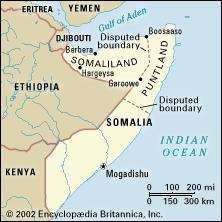
To my mind, this is one of the strongest contenders for recognition. A British colonial trusteeship, it achieved independence on 26 June 1960 and was promptly recognized by over 30 countries.

However, just five days later, 1 July 1960, it united with Italian Somali-land to form the Somali Republic. This soon proved to be a difficult and unhappy union.

Somaliland’s autonomy was stripped away and it found itself increasingly sidelined. However, in 1991, as what had now become Somalia sank into chaos following the collapse of the central government, Somaliland reclaimed its independence.

Despite its stability compared to Somalia, in the 30 years since then it has remained unrecognized on the world stage. While its case for statehood undoubtedly has a lot of sympathy, this is yet to be translated into formal acknowledgement by any UN members.

Even though a 2005 African Union fact-finding mission recommended that it be accepted as an independent sovereign state. That said, it has built up good working relations with a number of countries in Africa.

It also has high level contacts with many other countries around the world; not least of all the United Kingdom. Ultimately, it’s hard to see how Somaliland can ever reunite with Somalia.

But it also needs to make a breakthrough on international recognition. The question therefore is which country could be willing to go first and recognize it?

George Tirebiter

https://www.patreon.com/tirebiter

GT: A “self” determination group makes as much sense as a “libertarian” party. IMHO

JE: Some of us need to learn self-governance… we were taught to be “other directed” during our first years. Hence the group…

GT: But would people who don’t adhere to self governance join a group about the same?

JE: It is not a black and white thing…. IMHO. There are different levels of self governance.

GT: True, but your group is an echo chamber, no? Not to say echo chambers aren’t OK, many of the groups I’m in are such,but none have an agenda.

JE: It is a place where we can share our experience, strength, and hope.

GT: oh, ok

JE: At least that is my vision for it, we aren’t there yet…

GT: No

Send me another invite please.

JE: Some people believe in self-governance…. yet see the need for a libertarian party. Some people still fall into the “group trap.”

Kurdistan

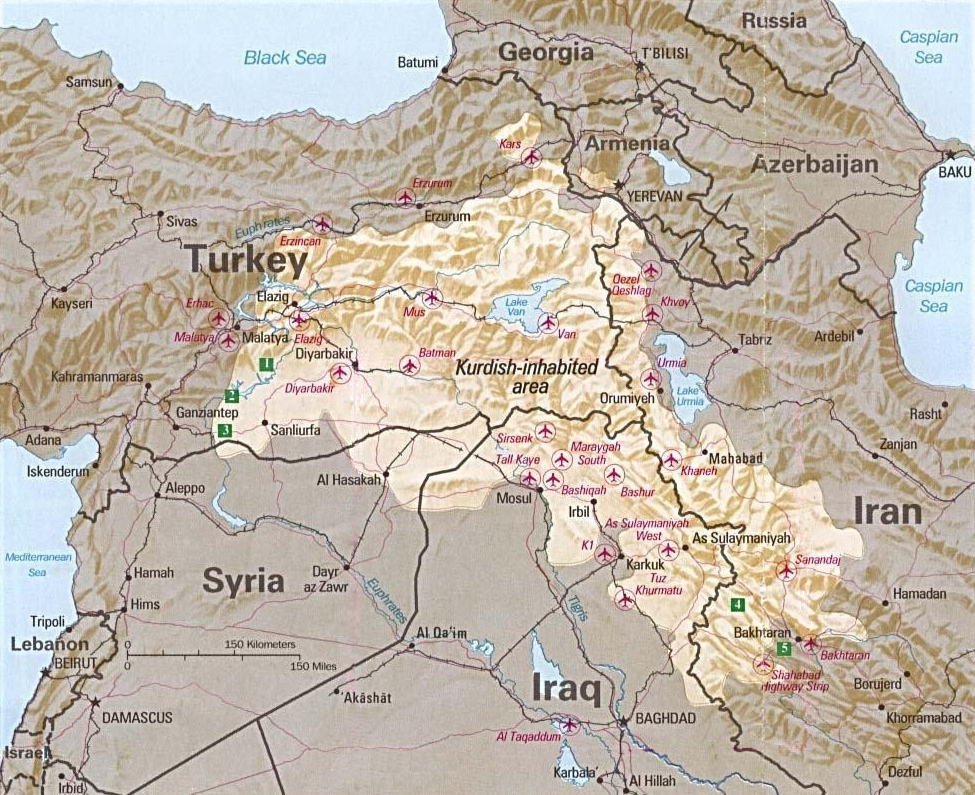
This is an interesting case, not least of all because it’s often said that the Kurds are the largest ethnic group in the world without their own state. Although they were promised the prospect of their own country under the Treaty of Sevres, at the end of the First World War, the agreement was never in fact implemented.

Instead, the territory was divided between Turkey and Iraq. In the century since then, the campaign for Kurdish independence has continued. In Turkey, the Kurdish Workers Party, the PKK, has waged a guerrilla campaign for over a quarter of a century.

However, the main focus has been on Iraq. In 1991, following the first Gulf War, the Kurds in northern Iraq established their own autonomous region, which soon came to be seen as an independent state in waiting.

This changed in 2003 with the overthrow of Saddam Hussein. The United States and other key actors wanted to keep Iraq united; albeit retaining Kurdish autonomy.

Nevertheless, on 25 September 2017, and despite strong objections from the Iraqi Government, the Kurdish Government organized a referendum on statehood.

With a 72% turnout, 92.73% supported independence. While many expected a declaration of independence, following considerable pressure from regional actors and key international partners, and a military campaign by the Iraqi Government, just three weeks later the Kurdish leadership announced that the results of the referendum had been frozen.

As things stand, it’s unclear when, rather than if, another push for independence will occur.

Non-violent method #4 Signed public statements

The Peaceful Revolution

In 1988, the German Democratic Republic (GDR) had been under Soviet rule for more than 40 years, and the Berlin Wall had stood erect for nearly 30. Strict Socialist rule meant extreme limits on speech and action. 

Travel outside the country was prohibited, and many East German citizens were separated from family and friends living in West Germany. Dissenters to the government of the GDR and Soviet rule led small protests throughout the years of Soviet rule, though in great fear of punishment from the Stasi, the secret police of the GDR. 

A new wave of protests began on January 17, 1988, when an annual memorial march for two Marxist revolutionaries in Berlin turned into a full-scale demonstration for human rights and democracy.

The march, an annual observance held by unknown citizens, transformed into a demonstration after a few protesters joined the march, chanting slogans, and others were moved to join. 

By October there were 320,000 people demonstrating in Leipzig alone, and groups of citizens held protests at churches across the country. Resistance groups published “Initiative ‘89,” a pamphlet/petition outlining their vision for a unified German democracy. 

On November 9, the East German government announced the opening of the border, allowing free travel in and out of the state. In the following days, citizens took sledgehammers to the Berlin Wall, and it was removed over the following months. 

After the barrier between East and West Germany was removed, East German political officials resigned in mass protest of the Socialist government, and as part of the mass movement towards democracy.

In March of 1990, the first multi-party, democratic elections were held, and the demonstrations ceased, their goal fully accomplished.

Non-violent methods 003. Declarations by Organizations and Institutions

Haitians overthrow a dictator

The Haitian President, Elie Lescot had been granted the powers of a dictator by his congress and was backed by the United States. He was representative of the mulatto ruling class during a time when black political radicalism was growing in Haiti. 

Lescot was also closely tied with the Dominican Dictator Rafael Trujillo. The Haitian student journal, Zinglins, had criticized President Lescot’s dictatorship and began a call for freedom of the press even as early as May 1945. 

The government quickly suppressed this opposition voice. However, the editors of another student journal, La Ruche, continued the criticism of the regime.

On January 1, 1946 La Ruche published a paper declaring the year for the victory of democracy over “fascist oppression,” and calling for freedom of the press.

Two days later, the police arrested the paper’s editors and the government prohibited the production of La Ruche. The editors were held in the prison in Port-au-Prince, Haiti’s capital, for a day.

On January 4, Jacques Stephen Alexis, a young black medical student, met with the editors of La Ruche, Gerald Bloncourt, and several other student leaders to plan action against the government and the suppression of their newspaper. 

They decided on a student strike to initiate a campaign to overthrow the Lescot regime. They spread the word to their fellow university and high school students that the strike would begin on Monday, January 7. 

They used coded messages to pass on information about the strike. The strike leaders formed a new political party, Party Democratique Populaire de la Jeunesse Haitienne (PDPJH), and called for immediate elections, the release of political prisoners, and freedom of the press.

On Sunday, Gerald Bloncourt convinced a popular lecturer to speak on freedom in anticipation of the revolution. After the lecture, they led a small march during which two of the leaders were arrested and held for the night.

The student strike began, as planned, the next day. The students told the press and the U.S. embassy of their plan to strike and march to the embassy for a demonstration.

The students marched out of their classes shouting, “Vive la Revolution.” Police beat them, so for protection, the male students called on women from an all-girls school. 

The female students formed a wall around the demonstrators and the crowd began their march. They marched past secondary schools to pick up more supporters and sang the national anthem along the way.

At the embassy, the demonstrators, which now consisted of students, some workers, and other citizens, encountered soldiers. The soldiers beat demonstrators and arrested several leaders. 

Later that day, Lescot banned demonstrations and national newspapers called on parents to control their youth. On January 8, the student leaders worked on gaining the support of workers at all levels. 

Beatings against demonstrators by soldiers helped manifest this support. Storeowners shut down their shops and civil servants, laborers, teachers, and transportation workers joined the strike. 

Demonstrators in the streets banged pots. Four thousand people marched through Port-au-Prince to the presidential palace. These demonstrations continued the next day. 

Military soldiers persisted in their repression and arrests of demonstrators. On January 10, as demonstrations continued in the streets, President Lescot declared martial law. 

In a speech to the entire nation, he stated that he would go to any measure to restore order. When a feminist organization later marched against the dictator, soldiers shot into the crowd, killing two demonstrators. 

In response to the shootings, demonstrators threw stones and started several riots throughout the day. Many other Haitian soldiers had refused to shoot at demonstrators, however.

Later that day Lescot’s cabinet resigned, unwilling to work for his regime any longer. The dictator was unable to organize another cabinet. The strike included workers from every industry and had spread to cities around the country. 

U.S. owned businesses were forced to stop production during the strike. Upper class business people and workers formed a political organization in support of the students.

On January 11, representatives of the strike met with Lescot after previous negotiations and asked for his immediate resignation. Lescot told them he would resign in May. 

That afternoon, three military leaders took over the government and placed Lescot under house arrest. They announced they would hold elections as soon as possible.

True to their word, the new regime held elections for congress and the presidency in May. Dumarsais Estimé, a black moderate politician loosely supported by PDPJH, was elected president and instated a mainly black cabinet.

The Haitians had shifted the balance of political power away from the mulatto upper class and had successfully deposed Lescot.