I think I have always been a Libertarian and just didn’t know what to call it. I first learned of the LP in 2015 and I was like FINALLY! Other people believe government should be fiscally responsible as well as stay out of day to day life as much as possible!
I don’t subscribe to any specific caucuses – I believe that sort of division is unnecessary and hurts the cause of liberty. That said, I am very much a MYOB Voluntaryist Libertarian.
I believe the more we try to regulate each other rather than educate or help each other, the more we allow those in power to stay in power. We are often being played and we need to see it and stop participating.
What I would LOVE to see in my country is a stop to the growth of government. It seems any time anything happens, more laws and more restrictions and more departments are established – all at OUR expense.
Nobody asked me if I wanted to pay for such regulation (I don’t). And yet here I am, working nonstop to eke money for food while also supporting many programs with which I don’t even agree.
Also, most programs don’t help the way they are intended. They are so heavy laden with special interests and restrictions and requirements that in the end they just cost everyone more.
I would like to see a drastic decrease in spending overall and allow the market to correct. I would like to see an increased focus on community, trade, and working together.
Until we can do this, those in power will remain in power because we’re too busy fighting each other. I am also aware that these are grand paradigm shifts and that I am only one person.
So I do what I can through my interactions with others, as well as by supporting Libertarian candidates and causes as well as welcoming newcomers to the party.
From what I can see, Self-Determine Advocates is an international organization. While I believe Liberty is for all, I also think it’s important that we recognize that we can most affect change within our own personal interactions and in our own communities.
According to the Human Freedom Index just out today. The US is now tied for the 17th freest country on this planet. I use Numbeo’s Cost of Living Plus Rent Index. It uses New York City as a benchmark at 100.
The United States has a Cost of Living Plus Rent Index of 56.69. The Netherlands ranked the 14th freest country has a COL+R of 55.62. The freest country in the world currently is new Zealand with a COL+R of 52.31!
If you can’t afford the freest country in the world. Finland is the 11th freest with a COL+R of 49.91, Sweden the 9th freest country is even cheaper at 49.69. Austria the 15th freest is only 49.64.
Canada the sixth freest is even less at 48.21! The UK is a little cheaper at 47.48 but it is tied with the US for 17th place. Germany is tied with Sweden as the 9th freest country on the planet but is a little cheaper with a COL+R of 47.16
But, if you are going for value, I would go with Estonia the 8th freest country with a COL+R of only 34.26!
A (Republican – at the time) friend told me she couldn’t figure out if I was a conservative or a liberal so I should check into the Libertarian Party. This was back in 2000/2001.
I did start looking into it a bit, but this was pre-Facebook/social media days so finding anything about the LP was hit and miss. I did register Libertarian in 2004, but got a card in the mail from my county after the election saying that since the party didn’t get over 5% of the vote, I was back to unaffiliated.
I kept researching and found that the philosophy of libertarianism felt like the right fit for me. I found Reason magazine a few years later via Glenn Beck. For a few years, I did register as a Republican but quickly re-registered in the LP when it was apparent that Trump was taking a lead.
Around the same time, I got involved with the Omaha chapter of Ladies of Liberty Alliance, and I’ve been volunteering as the secretary with my county’s Libertarian Party affiliate since 2016.
What kind of libertarian are you?
The real kind – LOL. I’m never sure how to answer this – basically, I just want more freedom for everyone and less government interference in our lives.
What would you like to see happen?
I’d like to see more people realize that overbearing regulations hinder individual and societal progress.
What is your vision for your country and the world?
The continued improvement of our general well being, preferably with less state interference.
How do you see these changes occurring?
Expanding free markets through example and education.
What can Self-Determination Advocates do to help?
Continue spreading stories about various libertarians around the country and the world, reach out to groups that might not traditionally have libertarian viewpoints to expand awareness of our ideals.
“Walk for a mile in someone’s shoes to live their life”.
Well, I’m a libertarian anarchist – a Voluntaryist. Decentralization is a philosophical tenet as well as self-determination and free association.
How did you become a voluntaryist?
That’s a long story. I started off a neoconservative/ paleoconservative mix. In 2009, I got interested watching Glenn Beck and finally got tired of GOPers bellyaching of “not finding a true conservative”.
I was more libertarian-leaning on foreign policy, on drugs, and abortion before Beck. I watched the Mises Institute’s videos in 2010 and begin to switch to a libertarian minarchist in 2014.
I began reading the works of Fredric Bastiat, Ludwig von Mises, Ron Paul, Larken Rose, Murray Rothbard, and etc. Caryn Ann Harlos posted a Stepfan Kinsella quote on February 24, 2016, that explains voluntary government is much as anarchistic as any anarcho-capitalist would want.
“So when you talk about government, the question is not how we classify it or what the best words are for state, government, etc., semantically: but rather: the question is: does the “government” that “minarchists” favor engage in institutionalized aggression, or not? If not, it’s not a state, and it’s not unlibertarian. If it does, it’s merely a type of state. Now the [anarcho-capitalists] believe you can have private institutions provide law, justice, defense, without necessarily engaging in systematic and institutionalized aggression–that is, without being a state. Whether you want to call such institutions “government” or not seems to me to be purely semantic, [especially] if we grant there is a distinction between state and government. The remaining question is simply what type of government the “minarchists” favor: do they favor a government that has the authority to commit institutionalized aggression, or not? If they do, then they are pro-state since such a government is a state. If they do not, they are [anarcho-capitalists], it seems to me, since private, non-state, non-aggressive institutions of law, justice, and defense is exactly what we [anarcho-capitalists] favor.”
You can say I became more radical since then, bordering on an agorist.
What would you like to see happen? What is your vision for your country and the world?
Well, I would like to see individuals interacting voluntarily without violence and without coercion with the threat of violence. It means no more relying on an institutionalized monopoly of violence.
As Mises said, (paraphrasing here) individuals can associate or dissociate with political entities as they wish.
How do you see these changes occurring?
Peaceful civil disobedience and counter-economics like dealing in gray and black markets with cryptocurrencies.
What can Self-Determination Advocates do to help?
Well, advocate for peaceful secession movements that seek independence not joining a centralized giant institutionalized monopoly of violence. Any secession movement should advocate decentralization and decrease the State’s power.
Secondly, self-determination is an individual thing and you cannot by vote override the minority of peoples’ rights. They have a right to stay in or leave the political entity or join another.
1) I don’t really know when I became a libertarian I’ve always stood up for what I felt right and often got into trouble for it.
2 ) I guess I’m a Lil audacious a bit on the wild side of a libertarian.
3) Peace, love, and rock and roll man; everyone just to be happy.
4) I’d like to see everyone happy is what I would want. But what I do see is it getting a lot worse before it gets better.
5) Really I think that we have to get rid of all parties to make that happen and just start over completely. Start over just to make things get back to the way it should be.
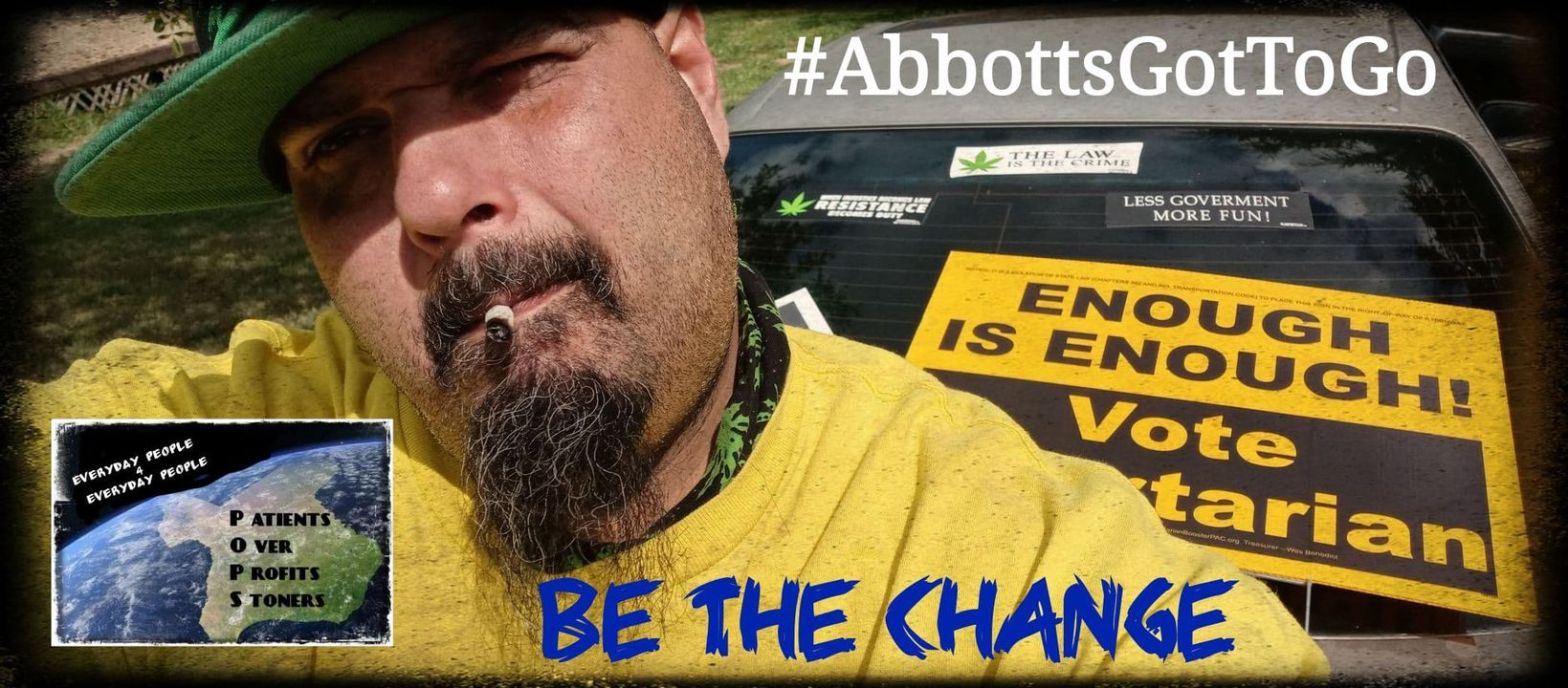
Stop voting for red and blue and yellow; we’re just people, we’re not colors, we’re people. We have to be the change and it starts with freeing the weed.
British citizens campaign for the abolition of the slave trade, 1787-1807
During the 1700’s, Great Britain was a strong colonial power with extensive land holdings in the West Indies, India, and Africa. A key aspect of this colonial empire was the shipment of slaves from Africa to the sugar plantations in the West Indies.
By the end of the eighteenth century, however, the conditions in Great Britain were favorable to the growth of the abolition movement. First of all, the Enlightenment ideals of freedom, the right to happiness, benevolence, and social reform fueled the debate over the nature of freedom and the nature of man.
To many, slavery did not seem to fit the ideal of the inherent freedom and dignity of man. Additionally, capitalist worldviews were on the rise. Adam Smith, considered the first capitalist theorist, argued that slavery was economically inefficient because a slave’s goal will be to consume as much food as possible, and do as little work as possible.
The most efficient of economies, according to Smith, was one in which people worked for their own personal gain. Finally, Quakerism (the Society of Friends), Evangelical sects of the Anglican Church (such as the Clapham sect), and the Methodist Church were growing and creating networks of British citizens that would eventually be harnessed for the abolition movement.
While there were economic, religious, and cultural conditions that were helpful to the abolition movement, it is important to note that Britain was also a strong colonial power that put great value in its land holdings overseas.
Many considered the slave trade and the sugar plantations in the West Indies to be essential to Britain’s dominance within the European political sphere.
By the 1770’s, much of the educated elite of Britain considered the slave trade morally wrong, but many also argued that Britain’s power would fall without the slave trade.
Additionally, King George III opposed abolition. Throughout the mid to late 1700’s, minority groups such as the Society of Friends (Quakers) started working toward abolition.
Two prominent Quakers, John Woolman and Anthony Benezet, published leaflets against the slave trade, put out a petition in 1783, and started creating extensive local networks of activists to get out their antislavery message.
The Clapham sect of the evangelical movement also started gathering support for the abolition movement, gathering stories of runaway slaves and defending them in newspapers and in the street.
Finally, Methodists also started getting involved and were incredibly effective at creating grassroots networks of the lower middle class. Despite this, it was not until the late 1780’s that dialogue over the issue became prominent in the public sphere.
In 1787, a group called the Abolition Committee (sometimes referred to as the Society for the Abolition of the Slave Trade) arose out of a Quaker group called the Meeting on Suffering.
This new committee was made up of Quakers, as well as prominent evangelical Thomas Clarkson and lawyer Granville Sharp. Sharp had gained prominence in defending a runaway slave named James Somerset and helping him win his freedom.
William Wilberforce, a young member of parliament (and a member of the Clapham sect) also joined the movement, publicly announcing his plans to present an abolition bill.
Hence, the Committee had connections with the Quakers, the Clapham sect, the Methodists, and the political elite like Prime Minister Pitt (Wilberforce’s good friend) and Charles James Fox, a prominent member of the opposition party in parliament.
Thus, the Committee acted in both the political and public sphere to accomplish their goal of the legal prohibition of the British slave trade. Starting in July of 1787, the Committee began setting up local correspondents and committees that could spread their message quickly throughout the country.
At that time, Thomas Clarkson also traveled throughout the country gathering information, witnesses, and documents about the slave trade. They then produced and distributed pamphlets about the atrocities of the slave trade, printed fliers with the picture of a slave kneeling with the words “Am I Not a Man and a Brother?” and held lectures all over the country.
Clarkson would often speak, offering vivid explanations of the terrifying conditions on slave ships and distributing a detailed drawing of a typical slave vessel.
At this time, former slaves Olaudah Equiano and Ottobah Cugoano wrote against the evils of slavery. Equiano’s book “Interesting Narrative of the Life of Olaudah Equiano, or Gustavus Vass, the African,” became a bestseller.
In 1788, the Manchester Abolition Committee initiated the first mass petition drive of the movement. The goal of the drive was to put pressure on individual members of parliament.
Members of the committee would hold a public meeting to pass the resolution on the petition (this meeting would be announced in newspapers), at which point the petition was circulated to get signatures.
The petitions generally centered on the moral issues at stake such as humanity, religion, and justice rather than economic arguments. Throughout the year, petitions were sent in to parliament, eventually adding up to between 60,000 and 100,000 signatures (the largest petition drive Britain had seen).
Additionally, the diversity of participants in the campaign had never been seen before. Anyone from elite merchants to farmers to intellectuals to sailors to religious leaders signed petitions.
Women were also very involved, making up 68 out of the 302 people on the first official list of subscribers to abolition in Manchester. Additionally, in 1788, women in London held their first “ladies only” abolition meeting.
There was also an “anti-saccharite” action under way in which people boycotted sugar from slave plantations in the West Indies. This action was largely aimed at women and youth because they were not able to participate legally in the petition drives.
This was not officially part of the committee’s initiatives, but certainly complimented their activities. In February of 1788, Prime Minister Pitt also pushed the Privy Council (an advising body to the Prime Minister) to start gathering information about the slave trade to present to parliament when Wilberforce would put forth his bill.
He did so on May 12, 1789. However, despite the petitions and the Privy Council’s evidence, discussion of the bill was delayed for two years because the House of Lords decided they needed to gather their own evidence.
Finally, in April of 1791, the bill was defeated. The London Society of West Indian Planters and Merchants had provided much of the opposition, starting their own counter-petitions in 1789 (though their signatures fell dismally short in number compared to those of the abolitionists) and lobbying the cabinet, House of Lords, and the commons.
After the 1791 defeat, the abolitionists mobilized again and started a second petition drive that was initiated by the London Abolition Committee in 1792. Clarkson went all across the country distributing materials and garnering support.
The committee was careful to distinguish that they were for the abolition of the slave trade, not slavery as a whole (they were not ready to fight that political battle at the time).
This time they gathered signatures, but held off sending the petitions in until they could send them all at once. The petition drive yielded 380,000-400,000 signatures.
News coverage of the abolition debate reached a peak in April of 1792. The House of Commons spent much of the month going over the petitions and ended up voting for gradual abolition.
However, the House of Lords stalled the bill long enough for the political climate to grow increasingly paranoid about sedition. There was both a slave revolt in French Saint Domingue (now Haiti) and the radical Jacobin revolt in France in 1791.
Though public opinion remained in favor of abolition, committees and organizations around abolition were suspected of sedition. The abolition struggle then shifted to be almost exclusively waged within parliament.
By 1804, fears of radicalism had all but disappeared, so in May of 1804, Wilberforce reintroduced the abolition bill, and it was again delayed in the House of Lords.
Clarkson then went on another country-wide tour to garner support and began to mobilize the grassroots networks again. In 1806, Wilberforce presented a partial abolition bill that would bar slave trade with foreign and conquered colonies.
The opposition sent out a petition, but Clarkson called for an emergency petition and gathered 5 times as many names as the opposition. In May of 1806, the Foreign Slave Trade Bill passed.
In early 1807, the committee looked into their support in parliament and decided to try for a bill calling for complete abolition. This time there were no opposing petitions.
In fact, many members of the opposition admitted feeling pressured by the widespread hatred of the slave trade. The bill was passed in 1807 in both houses.
While the committee had achieved its stated goal, it continued to disseminate information due to a backlash from citizens involved in the slave trade (particularly at the docks in Liverpool).
In 1814, the Treaty of Paris allowed for the opening up of the French slave trade with a British sanction. The committee initiated its final petition drive that ended up yielding 1,375,000 signatures (even Liverpool largely contributed).
This pushed Prime Minister Castlereagh to renegotiate that part of the Treaty with France. This was also a testament to the incredible networking, message spreading, and grassroots organizing of the Abolition Committee.
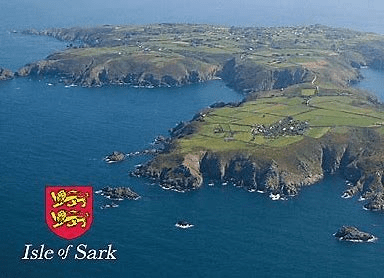
It is not common knowledge that until recently, the UK had the world’s last fully functioning feudal state right on its doorstep. Not part of the UK but – like all other Channel Islands and the Isle of Man – a part of Great Britain outside the United Kingdom, the Island of Sark, population 500, is the Commonwealth’s smallest SIM.
It makes its own laws and manages its own money. Administered by the Seigneur, a hereditary ruler who held the island for the British Crown, Sark was the last remaining feudal community in the Western world until 2008, when the islanders voted for democracy and the Seigneur’s powers were significantly curtailed.
The Seigneur, however, still pays an inflation-free tax to the Queen of £1.79 a year – a more significant sum 500 years ago when it first came into force and constituted ‘one 20th part of a knight’s fee’.
Cars are banned from Sark and planes are not allowed to land there, or to fly over the island below 2,000 feet. The place is engulfed by a strange quiet, broken only by the wailing of wind.
The island still abides by medieval laws, one of which says that ‘unspayed bitches are not allowed to be kept on the Island, except by the Seigneur’.
This law was adopted during the 17th century, when Chief Pleas (the island’s parliament) decided that too many dogs could cause problems with sheep farming. ‘Yes, our island is bitch-free,’ Michael Beaumont, the previous Seigneur and the father of the incumbent one (Christopher Beaumont), who inherited his estate from the Dame of Sark, says.
Another law states that 40 local family heads, including the Seigneur, are obliged to keep muskets to protect the island from invaders. A modest-looking brochure, the Constitution of Sark, reveals much about the island.
One of its articles states that, under Norman custom, a person can obtain immediate cessation of any action he thinks is an infringement of his rights. At the scene, he must, in front of witnesses, recite the Lord’s Prayer in French and cry out in patois: ‘Haro, Haro, Haro! À mon aide, mon Prince, on me fait tort!’ At which point, all actions must cease until the matter is heard by the court.
The Haro cry didn’t help the islanders when Sark was occupied by a garrison of 300 Germans during the Second World War. Nevertheless, not a single shot was fired from either side and the locals still refer to that period as a ‘model occupation’.
One remembered how the German commandant of Sark refused to take any action against local residents who defied the occupation authorities by keeping short-wave radios at their houses – an offence punishable by death anywhere else in occupied Europe.
In 1990, the island experienced another foreign invasion, albeit on a much smaller scale. It was taken over – single-handedly – by a drunken Frenchman, André Gardes, who landed on Sark with a semi-automatic weapon.
In a ‘manifesto’, written in broken English and pinned on the village noticeboard, he announced that he was taking control of the island. Having stated his intentions, he retired for a refill to a village pub, where he was apprehended and disarmed by the part-time constable (head of Sark’s part-time police force) and frogmarched to the island’s miniature prison, which consisted of one small, windowless cell.
The constable soon came to regret his bravery, for another island law made him responsible for feeding prison inmates and the Frenchman proved to be voracious. Luckily, two days is the maximum jail term in Sark and in due course the gluttonous invader was deported to his homeland.
Exempt from the UK’s social security and health schemes, the island takes good care of itself. Special community funds help young people through school and university, pay medical bills for the sick and provide pensions for the old.
I was born interested in self-determination. I have helped people with court cases, I have done a lot with fighting planning and zoning, I love to pass out jury nullification in front of courthouses.
I was huge in the fight for cannabis and know there is still much more to be done, I am on the LEC of the LPM, I have run for office, and many more things.
I can only see things changing when more do all of the above and educate more to be independent. I also have a small farm in the middle of the woods.
Wanted to tell you about Punam Giri’s short film “License.”
After repeated failures to get a driving license, Jeevan continues selling milk on his motorbike until he is fed up with paying bribes for not having a license.
Eventually, he is forced to bribe a middleman to get the license. The short movie portrays the ordeal of a common man fighting against a corrupt administrative structure that seems to be working in tandem to add on to the commoner’s woe.
You can see the film here:
How is the video business going?
Actually, I only make videos for Bikalpa. I work full time here. It’s a think tank. Bikalpa an alternative. I occasionally do outside videos beside Bikalpa and I also look after the administration.
What does the think tank do; what is the vision?
Bikalpa – an Alternative – For Freedom For Prosperity. You can check it here: bikalpa.org; We work on liberal values and advocate for sound public policy on liberal values.
“Bikalpa- an Alternative envisions a Nepal where rule of Law is supreme and all citizens can have an equal opportunity to prosper in their own country and enjoy their rights to Life, Liberty, and Property.”
What is the plan to achieve that vision?
We organize training, Do research, and advocate with policymakers based on our research. Targeted groups for training are bachelor’s students. So we share our ideas and how policy influences us in our daily life.
So, you work with college students mainly?
No, we also work with policymakers, bureaucrats, professors, students, we work with all of them.
Is there much interest in Classical Liberalism in Nepal?
You can see more on our website. It’s a new thing here. And there are many people who think it’s a western idea and won’t work here. But people will give their interest after you share your idea.
They think it won’t work in Nepal… What reasons do they give?
People mostly think it’s a western idea because they are a developed nation.
They think it will work for more developed nations… but not in Nepal?
Yes
How do they see Nepal developing, or do they want to be developed?
They see Nepal developing.
How?
This is their answer. GDP – has slightly increased but these people still believe Nepal is developing and will take time.
Akashic au Courant ushering in a Decentralized Fourth Industrial Revolution
How did you become a libertarian? I was born into it. My father did whatever he wanted. I grew up wanting to do the same. I matured, adopted the Non Aggression Principal, learned Austrian Economics and a deeper understanding of freedom.
What kind of libertarian are you? I am a free one. If one were to categorize – Voluntaryist Agorist.
What would you like to see happen? What is your vision for your country and the world? It would be great if the people were to unite and concentrate on the major issues that nearly everyone in nearly every political spectrum can agree on. A good start for the United States would be to follow the constitution.
My vision for all is that non-victimless crimes to be treated as non-crimes, the rejection of central bank counterfeiting, medical freedom, the respect of property rights and natural law.
How do you see these changes occurring? The answer is standing right in front of us. “In this historic hour of darkness – when the broken-hearted people living in the world agree there will be an answer.”
Agree to disobey dictates that despots thrust upon us. It will take a massive unification and civil disobedience. The antidote to much of humanities problems is opting into systems that are not controlled by the power structures that have cause most our problems and blame the populace.
They seek a “Reset” where they remain in control which the people can easily reject by opting into independent news, social media, education and communication methods.
Independent commerce such a barter and the growing of food. Voluntary decentralized currencies on permission less blockchains and commodity backed digital sound money ecosystems will save a lot of grief.
Sound money gold, silver, or models like Item Banc who is tokenizing the value of BHN – basic human needs – food, shelter, clothing, medical, and paper products.
Or any number of digital assets that offer privacy and are backed by hard goods unlike the current system which is backed by debt and confidence; and with the former inflating the later is waning.
What can Self-Determination Advocates do to help? Self-Determination Advocates can educate people on freedom resources and movements and introduce them to each other.





 Self-Determination Advocates