Studied at National Academy of Sports Medicine (NASM)
DT: I often identify as Geo-Libertarian and an e-democracy advocate (www.democracy.earth).
JE: Being a minister, could you start a permaculture community… and not have to pay property tax? You could charge residents a land tax instead…
DT: True. I’m going to be filing for a Religious Non-Profit here in California this year. Land Trusts can circumvent Jarvis-Gann 1% property tax limits apparently.
JE: Good idea! I don’t know about California. You have to negotiate with some counties…
DT: Community Land Trusts are a recognized thing AFAIK.
JE: What is the netork party you were talking about?
DT: They vote according to the e-Democracy outcomes. Pirate Party does the same thing, also 5 star movement.
JE: E democracy outcomes?
DT: Democracy.earth or decidim.org; just follow the popular will on votes for issues
JE: I will check it out. What do they do if I disagree?
DT: Recall, vote out, breach of contract?
JE: Is that three things? Can I stand aside?
DT: I guess any or all would be options. Withdraw endorsement? No pressure. I just want to have a decent looking list there.
JE: “You guys do what you want… but no thanks.” That is what I mean by stand aside… Quaker thing.
JE: “Or what man is there of you, whom if his son ask bread, will he give him a stone?”
Does all the libertarian talk in the group bother you?
DT: No. I’ve been lot’s of different flavors of libertarian over the years.
JE: Good, would hate to alienate you.
DT: lol. that’s MY job usually!
JE: Alieanting people? lol
DT: Gives me a joke idea….Q: What did one hungry alien say to the other hungry alien. A: “Do think if we land this thing and get out we’ll end up alieneating any people?”
JE: “self-de·ter·mi·na·tion, noun, the process by which a country determines its own statehood and forms its own allegiances and government.
‘the changes cannot be made until the country’s right to self-determination is recognized’ the process by which a person controls their own life.”
I equate it to self-governance.
CG: FASCINATING I like it.
JE: Wanted to thank you for your involvement in the SDA group. What do you think of the group now?
CG: Hmmm, After some interactions, I determined there was too much State for me and so while I haven’t left I did unsubscribe. I don’t have time to battle on Facebook right now, I’m focusing my energies and small amount of spare time on campaign support.
JE: Yes, we started the group… but it has taken on a life of its own.
CG: Yeah. Maybe newcomers who have yet to grasp the idea of Liberty 🤷♀️
JE: I don’t know what to do about it.
CG: LOL! Me either that’s why I just walked away. Indoctrination is hard to break.
JE: Part of me wants to struggle, part of me is just too tired…
CG: Exactly what I was about to say. I don’t have the energy to deal with that right now. Maybe after the election.
JE: Hoping if we have enough anti-statists it would sort itself out.
CG: Maybe?
JE: I actually encourage the statists to post to start a discussion. But it seems to be backfiring.
CG: I’ll look into it more when there aren’t 100 campaign-related things… Debating makes me tired. I prefer to encourage those who are becoming disillusioned.
JE: Finished reading the book. “Radicals for Capitalism” thanks for recommending it
MA: Absolutely! Great book!
JE: Who knew about the personalities! I guess many libertarians would love to work full time for liberty. You have found a way… that is so great!
MA: Yep the movement is expanding incredibly quickly and Gen Z is the most libertarian generation ever
JE: wow! How did you do it? Did you make it your goal?
MA: It sort of happened by accident. I was a very involved volunteer and as the org grew, they needed more staff. I just kinda decided to keep going even after I graduated last year, so now it’s my job.
JE: You just graduated last year?
MA: May 2018
JE: Congratulations what is your degree in?
MA:I doubled in Economics and Portuguese
JE: You speak Portuguese?
MA: Yep I coordinate with our Brazilian team regularly
JE: Wow! What do you think of Brazil as a country?
MA: Great place and great people. They have their bumps in the road, but one of the best places in the world imo, save America; if we don’t save America, Brazil may be an option.
JE: They have plenty of water! southern hemisphere… if the shit ever hits the fan.
MA: Brazil would be top pick for me hands down. They know political instability well and muddle through without losing stride. Uruguay, New Zealand, and Indonesia are pretty cool too though
JE: Trying to think of that guy who is really big on Brazil….
MA: Julio Lins? Giuseppe Riesgo? Sam Teixeira?
JE: No, some american libertarian…. “Brazil Is the New America: How Brazil Offers Upward Mobility in a Collapsing World” by James Dale Davidson
MA: It’s funny because Brazilians joke about how they’re the most American country outside of America. They have a word for it: Americanizado They are having a lot of libertarian growth there too. Yep, we have 500 SFL chapters there with 1500 leaders. Unlike here, nearly every university and college has a chapter – even in the Amazon.
JE: What do you think of… novo? or libertarios?
MA: Novo de que? Libertarios means libertarians
JE: http://libertarios.org.br/; http://novo.org.br/; Do you think any of the secession movements will gain ground? Ceara, Riograndense Republic, Pernambuco, US of Northeast, South Brazil, Rio de Janeiro, São Paulo?
MA: O sul é o meu país? Not anytime soon.
JE: I would like to do something for freedom… but I don’t know what… I think of that book “crush it” are you familiar?
MA: I haven’t read it but it’s a sales technique book right?
JE: What I think when I read it…. I could start a blog or web site… all it takes is time and passion…. same with a youtube channel. I am retired… with a small pension….
JE: What kinds of skill sets do you have?
MA: That is where I fall down: I was a freelance writer… for business journals, taught as a substitute teacher, worked at the Riverside Public Library, doing public programs, book groups, author events, film series, concerts, was a concert promoter in the 1980’s.
but it is hard to find my passion sometimes, I am not hungry anymore.
MA: Sounds like you have a number of different skill sets! You could write articles for newspapers or news sites, you could start a local libertarian meet-up group, you could focus on event planning, or you could focus on direct action/activism.
JE: I want to work with defacto nations, unrepresented peoples, and secession movements…
MA: Ah, that’s pretty niche. Where are you located?
JE: Yes, maybe too niche. Bryan Texas.
MA: Oh, nice – you’re by Texas A&M
JE: yes, sir
MA: We’re sending staff there in early February to recruit
JE: and I know the aggie libertarians advisor
MA: Well… there aren’t many tribes left in your area at this point. But Oklahoma has a lot of native activism that might be appealing.
JE: but they are YAF affiliated
MA: Is aggie libertarians still active?
JE: not much
MA: Ohhh…. yeah…. YAF is Reaganite. Not really our brand here at SFL.
JE: They have one contact person, but my friend is retiring and looking for someone to take over as advisor. I really like what you are doing with SFL… I wish there was a similar organization for old farts.
MA: Maybe that’s what you could do. Most non-students either do LP or Liberty On The Rocks, but the LP is a party and LOTR is basically a drinking group.
It would actually be cool to see the SFL model applied to an org for older volunteers. Local Coordinators who take on personal projects, make libertarian art, perform community service, host chapter meetings to discuss ideas, and do activism events, separate from party activity.
Your biggest hurdle would be freedom of association. How do you keep out weird/creepy people or toxic personalities? At SFL, we interview all volunteer candidates for our leadership team.
JE: yes, I resigned as county chair here…. we had people in our meetings but it was like herding cats
MA: That’s one of the struggles of an LP model – it requires herding.
JE: and I don’t think I have the charisma and leadership qualities you look for. More of a plow horse than a show horse. I made a list of organizations and prioritized them.and a list of possible new countries.
My thought is two- three fold…Helping these organizations find best practices…Helping them use non-violent means and planting the libertarian ideas… and the more countries there are… the more competition between them.
MA: Well, in SFL just under half of our students don’t run a group. We have a lot of people in non-traditional roles. Maybe if I give you some examples of leaders, it will help give you ideas of things you could do.
1. For the past two years, someone at University of Georgia has been travelling to campuses to give presentations on his doctoral research. He focuses on a libertarian analysis of early 20th century presidential administrations up to FDR.
2. One person at Carleton College in Ottawa creates online reading repositories for students and has been working with leaders in other countries to translate English-language libertarian books into other languages.
3. Another at Utah Valley University in Provo worked with friends in the Bitcoin industry to develop an app that uses blockchain encryption technology for voting systems. His county loved the idea so they’re using it and now he’s lobbying for rank-choice voting systems to be implemented.
4. One at Tulane University in New Orleans founded his own think tank with the help of some professors. They focus on libertarian approaches to poverty relief in the local area.
5. One at Florida International University in Miami coordinates the delivery of resources to youth refugees of communist countries with groups like Venezolanos Perseguidos Politicos Exilio as well as Sociedad Bastiat de Venezuela.
6. One at the University of Central Florida in Orlando runs food drives. His main technique is to pose a question to the greater student body: which political ideology is the most giving?
7. A student at Florida Atlantic University in Boca Raton hosted a fundraising event for a project he was coordinating to deliver food and medicine to people in Venezuela affected by the political upheaval in the country.
8. Another at Capital University in Columbus, OH always had a passion for filmmaking and libertarianism. The two passions met when she joined Emerging Order as a production assistant to create entertainment pieces like the Keynes vs. Hayek rap battle. She’s working on the sequel now: Mises vs. Marx rap battle.
9. A person at the University of North Dakota in Grand Forks spent most of last year focused on high-intensity end-the-drug-war activism, most of which funneled heavily into media hit generation. He alone got 54 media hits in local papers and several national online news sites.
10. A couple at the University of Florida in Gainesville were both artistically inclined, but felt that libertarian artists weren’t given many venue opportunities, so that opened the seasonal Ama-gi art show in DC at the Marriott Wardman park hotel during LibertyCon.
JE: wow that is all so exciting, I watched that rap battle.
MA: Yeah, Jessi is honestly one of the coolest people – very smart woman
JE: Are all these ppl SFL alumni? alum?
MA: 2, 8, and 10 are alumni – the rest are currently still undergraduate students. All of them work in the movement in their careers.
JE: Did I ask you about a libertarian non-profit incubator?
The Atlas Network does research incubation and the Charles Koch Institute is the largest non-profit incubator in the movement. Both have their pros and cons.
JE: Tell me about them?
MA: So there are a few different incubators that exist in the movement today depending on what people are interested in doing.
If you work in research, the Atlas Network is the way to go. They operate nearly 500 think tanks in over 100 countries on all six continents. Atlas is pretty exclusive, despite what their size tells you.
They’re very particular about the way partner organizations secure funding and what kinds of ideas are represented. You might say they’re guardedly libertarian, unlike other networks like the State Policy network which often see considerable neoconservative influence at the local level.
If you’re interested in grassroots organizing, Stand Together (KFF) and all of its subsidiaries are the most influential incubator around. The Koch Foundation does everything from educational nonprofits like Charles Koch Institute to grassroots activism like Americans For Prosperity to political activity like the American Legislative Exchange Council to volunteerism/charity like ACTS Housing and Youth With Faces.
Students For Liberty is also starting to become a small incubator for students. We partnered with several organizations to provide grants for students to start their own think tanks, non-profits, and news/media organizations. Last year, our leaders founded 41 different organizations worldwide.
JE: wow, what would you do in my shoes? I am often more of a dreamer than a doer… like to have a lot of support and direction.
MA: I went from mostly reading to becoming an activist after I went to my first LibertyCon in DC. It’s 3000 student and alumni activists from around the world who meet to learn about the latest ideas and successes. We meet every year and this year is going to be pretty big. It’s in April – I definitely recommend checking it out. For me, it kind of inspired me and, after doing simple projects for a year, I found I had a skill for recruitment and talent ID.
JE: Libertycon sounds like fun
MA: Support comes from the network imo. Surround yourself with people who are supportive and strive to give them the support you need. It becomes reciprocal and you learn a lot in the process.
Hello, sir how are you? I’m president organization MIC fighter for the independence of Cabinda.
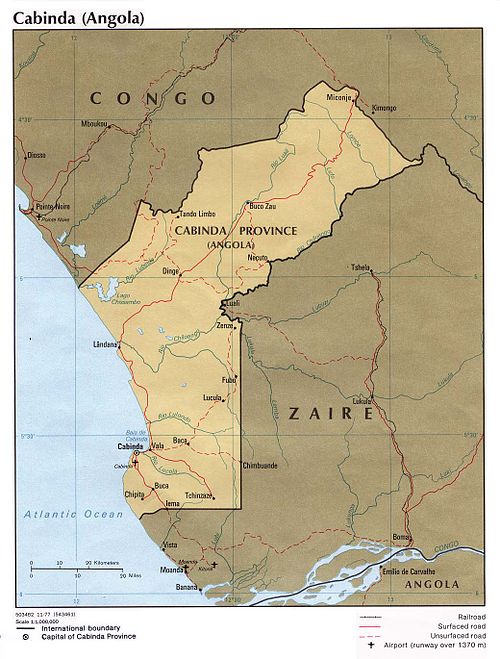
JE: Tell me about Cabinda. Following the declaration of Angolan independence in November 1975, Cabinda was invaded by forces of the Popular Movement for the Liberation of Angola (MPLA), with the support of Cuban troops. The MPLA overthrew the provisional FLEC government and incorporated Cabinda into Angola.
CV: Yes, is right, O people of Cabinda still live a colonization watch for international communities.
JE: How do the people of Cabinda feel about the free market?
CV: It’s normally because we want help for our liberation and be free like the people other countries
JE: You are oppressed by Angola and would like to be free? Have you tried non-violent means?
CV: Yes of course we want to be free because we fight with Angola, but our organization is pacific and not violent, I was three-time in jail.
JE: So, you still maintain a commitment to non-violence? What challenges do you face?
CV: Our method up to kind of help, we’ll receive, now we want organization self-determination for the independence of Cabinda but we haven’t international help, Cabinda has resources and we look for partners.
JE: You are looking for partners?
CV: We are looking for international financing from some countries that support our struggle for independence and then we will sign compromise agreements that are beneficial to both.
JE: Compromise agreements?
CV: Yes
JE: What is MIC?
CV: MIC it means Movement Independence of Cabinda, is a Cabindan freedom fighter.
JE: Thank you for informing me about your cause… What can I do to help you?
CV: We want help in the area of making an independence petition so to send to the UN, United Nation.
JE: Do you have any representation in the Angola Government or the Provisional Government? The Government of Portugal? Are you a member of UNPO? Options are… try to make Cambida an Autonomous Province… Like Quebec in Ontario.
Or a Special Economic Zone. It might be easier to get declared a free Trade zone. Belize, Buco-Zau, Cabinda, or Cacongo, in which areas are you strongest? Maybe you could start a charter or private city.
CV: First for all, it’s impossible to have any representation in Angola Government because our movement, MIC fights for the independence of Cabinda against the State of Angola, we mean Angola Government that occupies Cabinda since 1975 until now.
JE: These are not your end goals, but are ways to increase your independence and could be used as steps toward that goal. It is very hard to reach your goal, especially through violence. Research… see that working non-violently through the system increases your odds.
Do you have connections within the Cabinda diaspora?
CV: When it comes to UNPO, we were a member, but the Angolan Government has been making a strong effort in diplomacy so as to legitimate its occupation and colonization of Cabinda in the international community that’s why Cabinda nowadays Cabida is out of this institution, UNPO.
We are so grateful for your advice, but the most strong option or will is independentism so we mean the desire of the people of Cabinda to be the owner of being free and sovereign from Angola.
We also want, Cabindans, to come true this dream by holding or making Referendum. We would like to let you know that our fight doesn’t base upon economical reasons, but upon the right of self-determination separate from the government of Angola.
JE: You want a separate national identity from Angola.
CV: We always had a distinct identity from Angola. When the liberation movements of Angola MPLA, UNITA, and FNLA, decided with Portugal Government to hold a meeting in which was negotiated the independence of Angola they decided the following: Angola constitutes a unit and undividable entity in geographical and political actual limits, só Cabinda is the integrant part which can’t be alienated.
In that time the owners of Cabinda weren’t called or asked about what could be the future of their land.
JE: I am so sorry. Are you in Angola now?
CV: No, I’m Cabinda. I never live in Angola, since I born. I lived 6 years out Cabinda when I was studied in Ukraine.
JE: You studied in Ukraine? Are there many Cabinda ex-pats in the U.S.?
CV: Yes, I studied in Ukraine at National Mining University, Dnipro City. There are many Cabindian students U.S.A
JE: If there are any rich Cabindan’s you might be able to get them to invest in a charter or private city in Cabinda. They could even help you negotiate with the Angolan government.
CV: All people of Cabinda that live in the U.S. or that study in Ukraine is poor nobody is rich, sorry.
JE: Special Economic Zones can solve more than economic problems.
CV: It’s a good idea but only is be free because the Angolan Government doesn’t do anything in Cabinda.
JE: Do they just want your oil revenue? How many people live in Cabinda? How many want independence?
CV: Yes, the Angolan Government only wants revenue from oil. In Cabinda live 801. 370 people this number to correspond sense made in 2013. All people in Cabinda want independence. The movement independent are people speaker because we want the UN to realize referendum in Cabinda for people to choose your political destiny.
The people can be the final judges for the future of Cabinda. At that moment we want international help and we read to do a good deal with the country or person will help us.
Co-founder, Director at Nepal Language & Research Solutions
How did you become a classical liberal?
I came to know about the classical liberal thought and its ideas when I went to work for a think tank (founded by classical liberals) after I finished college in 2008.
Until then I did not have much idea about it. In fact, my thoughts would have been left-of-center because that’s the predominant ideology in Nepal.
When I got introduced to the classical liberal thought, I liked it and began exploring more about it. In a few months, I became a staunch supporter of freedom.
I have been furthering my knowledge of classical liberal thinking ever since and also been doing my best to promote it to more people.
I grew up in an agricultural family that lives in a small south Indian village. I Have been actively engaged in various civil society organizations that lead me to join a Pro classical liberal political party started by Inspiring public intellectual Dr. JayaPrakash Narayan.
I realized Indian Governments always told peasant families and the rural population they would be helped through Welfare schemes and fiscal support, but most rural and Agricultural families never got a chance to get out of poverty.
One Leadership Training program at the International Academy of Leadership, Gummersbagh organized by the Friedrich Naumann Foundation for Freedom provided a strong opportunity to Understand the Moral and philosophical roots of classical liberalism.
India and most other developing countries are illiberal Authoritarian Big Governments.
What is the vision for the “Swatantrata Center?”
I have been a Serial Social entrepreneur who runs organizations that work in areas of political reforms (Loksatta Party), Anti-Corruption activism (Co-founder: Youth for better India), Free-market economic reforms, and entrepreneurship through India’s Future Foundation, engaging Youth in the Political process through the Youth Parliament Program.
We wanted to build a social enterprise that can promote causes that can build a better world for each and every individual across the world. Swatantrata Center envisions a peaceful and prosperous society where every individual has the choice and opportunity to lead a decent life with dignity.
What is the plan to attain that vision?
Swatantrata strives to advance ideas and policies that cause human flourishing through policy education, digital activism, and grassroots advocacy.
We run various initiative and campaigns to create awareness and popularity for ideas and policies that cause human flourishing. We provide educational and learning opportunities for young people to understand and gain exposure to ideas and policies to build a Free society.
We also equip them with knowledge and the necessary tools to promote positive change through policy-making and political practices. The Youth Parliament Program initiative has been the biggest success for us.
We have organized grassroots campaigns for classical liberal causes like economic freedom, street vending, responsible spending/fiscal responsibility, decentralization, etc.
We plan to build strong collaborations with various people, organizations, educational institutions, and popular personalities to build a grassroots movement for classical liberal ideas.
We will utilize the power of the internet to reach more people. We run digital campaigns that can reach a huge number of people and engage with the power of social media.
Our policy conclaves have been very successful and our flagship Annual conference #Swacon went online due to COVID 19. #SwaCon is the world’s first of its kind and one of the largest libertarian virtual conferences with the theme of “Reclaiming Liberalism (classical).”
We were able to bring more than 40 libertarian scholars, experts, entrepreneurs, and academicians who spearhead the cause of liberalism and human flourishing all over the world.
Truly, a stellar line up of International speakers.
What challenges do you face?
The biggest challenge to promoting liberty is the strong historical and cultural influence of socialist thinking which is very hard to counter in countries like India where we have a huge uneducated population.
Indian political climate is divided nationalist right vs Pseudo liberal left which is both dangerous to a free society. The growing trend of nationalism and Socialism in western countries also have an influence on many young people these days.
We are all trying to build a strong movement that can fight for the ideas of a free society.
How can we help?
You can help us by sharing and promoting the story of our fight for a free society. We are also open to building a partnership-based project with an international foundation.
MY: Advancing libertarian on a daily basis contributing towards the revolutionary restructuring of Sudan.
JE: Revolutionary restructuring of Sudan?
MY: Removing the power from the hands of the Islamic Fundamentalist elitist group which have been committing genocides against our masses for decades, that led to the separation of the bigger part of Sudan.
To enable the people to get the power so as to restructure the country on New complete constructive change basis in which no one racist, religious, sectarian, mafia or elitist group have a monopoly over the state and decide on behalf of the people over who will be their enemy or friend.
Rather people will be free to coexist as individuals and groups who will cooperate with each other voluntarily, and the state will be there only to facilitate their internal and external flourishing rather than becoming an obstacle to their prosperity and turn one group against the other to benefit the elitist group in power while sinking the masses into hatred and violence.
JE: Wow, you said a mouthful… What do you see as your roll in this?
Role in the road to positive progressive inclusive Sudan for all Sudanese is to create awareness in the field of human rights, liberty, and mobilize masses to demand their stake in the country through peaceful and voluntary means.
Using peaceful protests and sit-ins as it’s going on in several areas within the most war-torn areas like Darfur to pressure the genocidal regime to withdraw and disarm its militias and secure the farms of the farmers.
So their lives will be undisturbed by the tribal and racist militias which were being armed by the regime of Bashir to carry out genocide in Darfur 18 years ago which have never stopped the atrocities even though the media stopped covering those crimes long ago.
JE: I don’t know anything about Sudan…. is there a libertarian party there?
MY: There has never been an influential political party with libertarian philosophy but there are powerful armed revolutionary movements with libertarian programs and non-armed activism based libertarian movements struggling for a free society.
JE: What are the names of the libertarian movements?
MY: Sudan Liberation Movement/Army led by Abdulwahid Mohammed Alnur is fighting for Libertarian, Democratic, Secular, and Federal Sudan based on equal citizenship rights and obligations.
The movement has Students’ faction known as the United Popular Front that has the strongest presence in all Sudanese universities that promote values of the free society and create awareness about the misinformation being instilled on the people by the Islamic Fundamentalist State machinery.
Through organizing discussions, informative symposiums, and debates on the daily matters of the state and mostly on the field of marginalized communities and regions of Sudan but also there are other movements with the same name.
Sudan Liberation Movements with slight or no differences in the name led by other leaders who were initially part of the same movement but broke away to sign peace agreements with the regime.
Some managed to sign some kind of agreement based on shaky ground that could not bring any positive change on the ground even to themselves so those groups some changed their libertarian principles to other than libertarianism.
They thought it is too radical to accomplish such as libertarian free society and others still claim libertarianism, but in the field, they have no political or military influence. So the only strongest movement with libertarian principles in Sudan as per now is Sudan Liberation Movement/Army led by Abdulwahid Mohammed Alnur.
The strongest student-led movement in all Sudanese Universities is its very own student wing United Popular Front that advocates rationally about free prosperous Sudan based on libertarian principles.
There are individual advocates and civil society organizations which started embracing libertarianism.
JE: On a scale of 1-10 one being totally statist – 10 totally libertarian… How would you rate the Sudan Liberation Movement?
MY: 9. Sudan Liberation Movement/Army did not reject non-violent means rather it was formed in 1992 by university students as one of the nonviolent movements basically to call for the rights of the marginalized people of Sudan.
At the end of 2002, it’s being forced by the regime of Omer Al-Bashir who said that we came to power by the use of guns. Whoever is dreaming of liberty in this country has to take up arms and refuses to listen to the peaceful means of ending human rights violations.
It left no option for the movement but to take up arms. That’s the language the elitist ruling group could understand at the time but that does not mean Sudan Liberation Movement/Army is only using arms as the means to accomplish a free prosperous peacefully coexisting society. Rather it’s using popular peaceful means of demonstrations and intellectual liberation as great pillars to liberty.
JE: If I were to send you a list of non-violent tactics… Could you tell me if you (SLM) have tried them, how effective they were, and the consequences of using them?
MY: You mean you have the list or want to know about it?
JE: Here is my list;
THE METHODS OF NONVIOLENT PROTEST AND PERSUASION
Formal Statements
1. Public Speeches
2. Letters of opposition or support
3. Declarations by organizations and institutions
4. Signed public statements
5. Declarations of indictment and intention
6. Group or mass petitions
Communications with a Wider Audience
7. Slogans, caricatures, and symbols
8. Banners, posters, and displayed communications
9. Leaflets, pamphlets, and books
10. Newspapers and journals
11. Records, radio, and television
12. Skywriting and earth writing
Group Representations
13. Deputations
14. Mock awards
15. Group lobbying
16. Picketing
17. Mock elections
Symbolic Public Acts
18. Displays of flags and symbolic colors
19. Wearing of symbols
20. Prayer and worship
21. Delivering symbolic objects
22. Protest disrobing
23. Destruction of own property
24. Symbolic lights
25. Displays of portraits
26. Paint as protest
27. New signs and names
28. Symbolic sounds
29. Symbolic reclamations
30. Rude gestures
Pressures on Individuals
31. “Haunting” officials
32. Taunting officials
33. Fraternization
34. Vigils
Drama and Music
35. Humorous skits and pranks
36. Performances of plays and music
37. Singing
Processions
38. Marches
39. Parades
40. Religious processions
41. Pilgrimages
42. Motorcades
Honoring the Dead
43. Political mourning
44. Mock funerals
45. Demonstrative funerals
46. Homage at burial places
Public Assemblies
47. Assemblies of protest or support
48. Protest meetings
49. Camouflaged meetings of protest
50. Teach-ins
Withdrawal and Renunciation
51. Walk-outs
52. Silence
53. Renouncing honors
54. Turning one’s back
THE METHODS OF SOCIAL NONCOOPERATION
Ostracism of Persons
55. Social boycott
56. Selective social boycott
57. Lysistratic nonaction
58. Excommunication
59. Interdict
Noncooperation with Social Events, Customs, and Institutions
60. Suspension of social and sports activities
61. Boycott of social affairs
62. Student strike
63. Social disobedience
64. Withdrawal from social institutions
Withdrawal from the Social System
65. Stay-at-home
66. Total personal noncooperation
67. “Flight” of workers
68. Sanctuary
69. Collective disappearance
70. Protest emigration (hijrat)
THE METHODS OF ECONOMIC NONCOOPERATION: ECONOMIC BOYCOTTS
Actions by Consumers
71. Consumers’ boycott
72. Nonconsumption of boycotted goods
73. Policy of austerity
74. Rent withholding
75. Refusal to rent
76. National consumers’ boycott
77. International consumers’ boycott
Action by Workers and Producers
78. Workmen’s boycott
79. Producers’ boycott
Action by Middlemen
80. Suppliers’ and handlers’ boycott
Action by Owners and Management
81. Traders’ boycott
82. Refusal to let or sell property
83. Lockout
84. Refusal of industrial assistance
85. Merchants’ “general strike”
Action by Holders of Financial Resources
86. Withdrawal of bank deposits
87. Refusal to pay fees, dues, and assessments
88. Refusal to pay debts or interest
89. Severance of funds and credit
90. Revenue refusal
91. Refusal of a government’s money
Action by Governments
92. Domestic embargo
93. Blacklisting of traders
94. International sellers’ embargo
95. International buyers’ embargo
96. International trade embargo
THE METHODS OF ECONOMIC NONCOOPERATION: THE STRIKE
Symbolic Strikes
97. Protest strike
98. Quickie walkout (lightning strike)
Agricultural Strikes
99. Peasant strike
100. Farm Workers’ strike
Strikes by Special Groups
101. Refusal of impressed labor
102. Prisoners’ strike
103. Craft strike
104. Professional strike
Ordinary Industrial Strikes
105. Establishment strike
106. Industry strike
107. Sympathetic strike
Restricted Strikes
108. Detailed strike
109. Bumper strike
110. Slowdown strike
111. Working-to-rule strike
112. Reporting “sick” (sick-in)
113. Strike by resignation
114. Limited strike
115. Selective strike
Multi-Industry Strikes
116. Generalized strike
117. General strike
Combination of Strikes and Economic Closures
118. Hartal
119. Economic shutdown
THE METHODS OF POLITICAL NONCOOPERATION
Rejection of Authority
120. Withholding or withdrawal of allegiance
121. Refusal of public support
122. Literature and speeches advocating resistance
Citizens’ Non Cooperation with Government
123. Boycott of legislative bodies
124. Boycott of elections
125. Boycott of government employment and positions
126. Boycott of government depts., agencies, and other bodies
127. Withdrawal from government educational institutions
128. Boycott of government-supported organizations
129. Refusal of assistance to enforcement agents
130. Removal of own signs and placemarks
131. Refusal to accept appointed officials
132. Refusal to dissolve existing institutions
Citizens’ Alternatives to Obedience
133. Reluctant and slow compliance
134. Non Obedience in absence of direct supervision
135. Popular nonobedience
136. Disguised disobedience
137. Refusal of an assemblage or meeting to disperse
138. Sitdown
139. Noncooperation with conscription and deportation
140. Hiding, escape, and false identities
141. Civil disobedience of “illegitimate” laws
Action by Government Personnel
142. Selective refusal of assistance by government aides
143. Blocking of lines of command and information
144. Stalling and obstruction
145. General administrative noncooperation
146. Judicial noncooperation
147. Deliberate inefficiency and selective noncooperation by enforcement agents
148. Mutiny
Domestic Governmental Action
149. Quasi-legal evasions and delays
150. Noncooperation by constituent governmental units
International Governmental Action
151. Changes in diplomatic and other representations
152. Delay and cancellation of diplomatic events
153. Withholding of diplomatic recognition
154. Severance of diplomatic relations
155. Withdrawal from international organizations
156. Refusal of membership in international bodies
157. Expulsion from international organizations
THE METHODS OF NONVIOLENT INTERVENTION
Psychological Intervention
158. Self-exposure to the elements
159. The fast
a) Fast of moral pressure
b) Hunger strike
c) Satyagrahic fast
160. Reverse trial
161. Nonviolent harassment
Physical Intervention
162. Sit-in
163. Stand-in
164. Ride-in
165. Wade-in
166. Mill-in
167. Pray-in
168. Nonviolent raids
169. Nonviolent air raids
170. Nonviolent invasion
171. Nonviolent interjection
172. Nonviolent obstruction
173. Nonviolent occupation
Social Intervention
174. Establishing new social patterns
175. Overloading of facilities
176. Stall-in
177. Speak-in
178. Guerrilla theater
179. Alternative social institutions
180. Alternative communication system
Economic Intervention
181. Reverse strike
182. Stay-in strike
183. Nonviolent land seizure
184. Defiance of blockades
185. Politically motivated counterfeiting
186. Preclusive purchasing
187. Seizure of assets
188. Dumping
189. Selective patronage
190. Alternative markets
191. Alternative transportation systems
192. Alternative economic institutions
Political Intervention
193. Overloading of administrative systems
194. Disclosing identities of secret agents
195. Seeking imprisonment
196. Civil disobedience of “neutral” laws
197. Work-on without collaboration
198. Dual sovereignty and parallel government
MY: Great list. Any documents or books in those fields that can break them down in for detailed form
What can I do to help you in your present situation?
MY: Great question. MY: You can help in any of these; Recommend educational opportunities that can advance better leadership, Recommend great books in the field or donate them, Link up workshops in the field, Send intellectually relevant pieces, Link up with organizations which support in the field,Engage in our future campaigns. Connect us to wider pro-liberty families. And give advice and suggestions on how free prosperous societies develop. Also, you can help in linking with leadership mentors.
PE: Thanks, I was a delegate in Orlando and started friending random libertarians.
JE: Thank you, what did you think of Orlando?
PE: Convention? It was fun, I got along with everyone I met and learned a lot. There is a lot of shenanigans and arguing on the floor but way better then the stories I heard from the RNC/DNC.
JE: How did you become libertarian, Paul?
PE: Hated Trump and Hillary so I voted for Gary. Found my self going down the rabbit hole and now I’m in the mises and Radical caucus.
JE: So, you have been involved in the party since 2016?
PE: No, joined as a dues-paying member about a year ago. Started showing up at the spring Maryland state convention in early March. Day or 2 after Duncan Lemp was killed.
JE: So, pretty happy with the party now?
PE: I have my issues but I ain’t leaving. I’m just here to keep a principled message coming from the party and I feel it’s on the right track. Help with activism to show that the state won’t do it for you.
JE: Can I ask what you would change?
PE: I would like to see more economic arguments going into fed and fractional reserve banking. I don’t deny systemic racism is a thing but instead of invoking emotion, explain like an action/reaction.
Condemn the riots and destruction of private property but acknowledge that protests and riots are blow-back like 911 because of government intervention where it shouldn’t be. I think the Libertarian message should be a detailed explanation of how the government is screwing and take advantage of you.
JE: I want to work with de-facto nations, unrepresented Peoples, and secession movements to get recognition and self-determination. Talked to the leader of International Alliance of Libertarian Parties, Geoff Neale.
MA: Most of the people I know who do that are in the Amazon or Serbia. Very cool! Are they an Atlas network partner?
JE: He said that students for liberty have people all over the world; not sure about Atlas network.
MA: Yep we’re in 110 countries.
JE: They sound great but wonder if they are too… Randian… for my taste, your opinion?
MA: SFL? We’re a “big tent.” About 5-10% are objectivist, but we don’t focus on that stuff.
JE: No, Atlas Network; so, how would you advise me about working with these groups?
MA: Oh, not at all, you’re thinking of Atlas Society. Atlas Network is a conglomeration of 500+ libertarian think tanks and nonprofits operating in 130 countries. Research oriented.
JE: wow sounds good
MA: Read Brian Doherty’s book Radicals For Capitalism. It’s a history of the movement and details all the drama and relations between nearly every org from the 1800s to today. If you want to know the down low, that book is the primer. Beltway vs globalist vs misesian vs rothbardian… chicago vs austrian… objectivists vs anarchists vs western libertarian parties esp in North America
JE: I was thinking of that book today; They have it in the local library.
MA: It’s a must read. Dense but mind blowing
JE: Been wondering what book to read next, thank you. How are you doing?
MA: Great! Just finished a tour of the Carolinas starting up groups and gathering contacts. Hitting the Florida panhandle pretty soon. Life is good otherwise hbu
JE: Thinking of moving. Florida is number one… New Hampshire is two. FSM is in the shire. But you have been telling me about all the libs in Florida. Maybe the shire in summer and Florida in winter. Where would be a good pace to move in Florida? I read “It usually begins with Ayn Rand” back in the 70’s (?)
MA: I’d recommend Ft. Walton, St. Augustine, Fernandina Beach, Ft. Myers, and St. Petersburg. If you like big cities, Tampa. If you like expensive cities, South Beach. If you like the country, anywhere along the forgotten coast.
JE: Those are all places with libertarian communities?
MA: Those are my fav places in FL. Miami, Fernandina, and St. Petersburg are near large communities. The biggest communities are Tallahassee, Miami, and Orlando. Tallahassee is a college town though and Orlando is a commuter wasteland with imo the worst tourists. What kind of area are you looking for to settle? Young, older, hip, religious, educated, southern culture, cowboy culture, country, quiet, beach, farm, bustling, touristy, nightlife, etc?
JE: Not really sure was thinking of FSM to be near other libertarians… I guess I am more a city type but can live in the country too…
MA: FSM?
JE: Getting older and freedom is a big part of my identity. Free State Movement.
MA: Ah for NH
JE: Yes
MA: NH is smaller, maybe more impact there… Both carry weight for different reasons: NH for size, FL for swing state.
JE: True Florida is a swing state. I am more interested in community, voluntaryism, than trying to change politics. Just because… I am not very good at politics, changing people’s minds.
MA: In that case, big cities are more of a no-go in FL. The biggest community as a ratio of city size is hands down Tallahassee. They sorely lack organizers, and are averse to electoral politics, but have a ton of young manpower and a very intellectually oriented community of budding libertarian entrepreneurs. The community culture is fiercely independent and somewhat insular, interacting only with other panhandle communities – namely folks in Pensacola.
JE:Tallahassee sounds like a plan and that is near the forgotten coast too.
MA: I’d recommend visiting first. It’s a strange town. Half of residents are 18-25 and another quarter are lawyers/politicians. It’s closest comparison might be Columbia, SC, but Tallahassee is more hipster and has fewer full-time residents, most of whom reside in Midtown or East Side.
I grew up with many Classical Liberal values because of my father. My father was the owner of a Cinema House in Rawalpindi (Pakistan), a business that he inherited from his father. He mostly played American movies and maybe developed his liberal social ideas from Hollywood.
As a young man in the 70’s, he had supported Zulfiqar Ali Bhutto’s Islamic socialism and was humbled by the economic destruction which ensued. I used to read economic literature extensively even after high school, and socialism never made sense to me.
In 2013, my son’s birth proved in catalyzing my journey into self-awareness and Anarcho-capitalism. And then I discovered Dr. David Friedman, who I am most influenced by. I also developed many ideas while studying the economy and legal system as a broadcast journalist.
In 2014 I started an initiative on Facebook called the Free Association of Anarchists in Pakistan. This group is now called the Pakistan Libertarian Party, but it helped the Executive Director of Policy Research Institute of Market Economy to find me and offer me a job.
After working there for about three years as the program director, helping this young organization quickly reach the top 100 think tanks in Asia/Pacific, I left in 2019 to start the Technology Application Unit (TAU) with the help of Linda Whetstone and the Atlas Network.
TAU is positioned as the only Global Anarcho-Capitalist Research and Innovation Think Tank. We study how technology can be used to improve governance. We create public goods, and our objective is governance without government.
We see the UN pushing a global agenda based on the values of international socialism, and in response, we are now raising the agenda of international free-market capitalism.




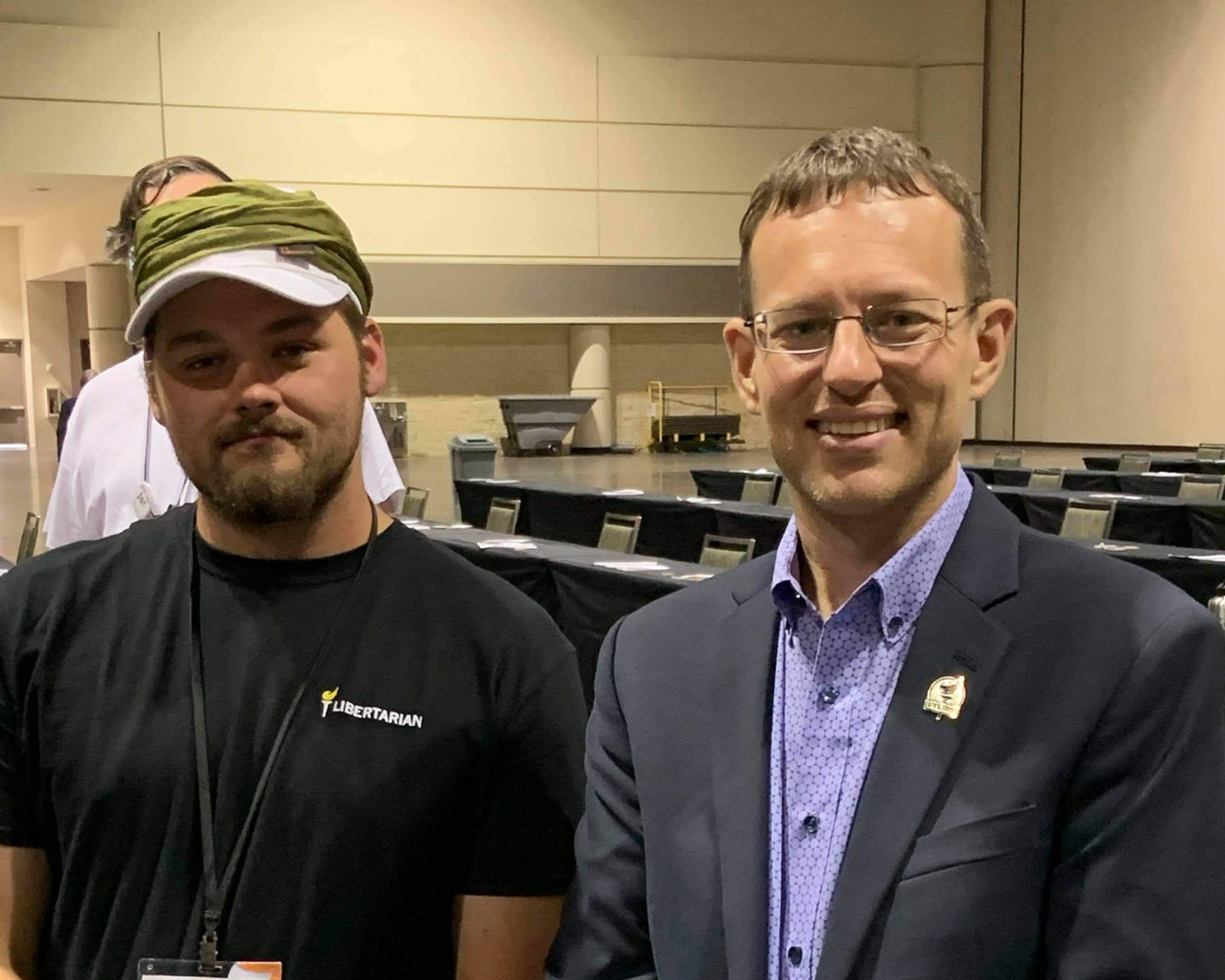

 Self-Determination Advocates